
Technical SEO
Read more about this topic
Master the technical foundation of search engine optimization with our in-depth guides, designed to help you boost rankings, enhance user experience, and secure long-term organic growth. From crawlability and indexation to Core Web Vitals, site speed, and structured data, we break down complex concepts into actionable steps—perfect for small business owners, bloggers, and digital marketers. Learn how to fix crawl errors, implement hreflang for international audiences, optimize JavaScript and SPAs, and strengthen website security beyond HTTPS. With practical audits, tool recommendations, and solutions for canonicalization, XML sitemaps, and log file analysis, you’ll ensure search engines can efficiently discover, render, and rank your content. Unlock the technical edge to outpace competitors and future-proof your site against algorithm updates.
28 articles
8 subtopics


More in Technical SEO
Ecommerce Website Architecture: Optimizing Online Stores for Search Engines
MobileFirst International SEO: Optimizing Hreflang for Global Mobile Users
Keyword Research for SPAs: Targeting the Right Terms for Single Page Applications

Sitemaps for Giants: Ensuring Every Page of Your Large Website Gets Indexed
Demystifying Structured Data: A Beginner's Guide for SEO Fast Track
Plugin Performance: How to Identify and Fix Slow Plugins on Your Site
Technical SEO: The Complete Guide for Small Business Owners, Bloggers, and Digital Marketers
Technical SEO is the backbone of any successful search engine optimization strategy. It ensures that search engines like Google can efficiently crawl, interpret, and index your website's content, directly impacting your rankings, organic traffic, and user experience. On SEOFastTrack, we break down complex technical concepts into actionable, step-by-step guides—covering everything from crawl budget and site architecture to JavaScript rendering and Core Web Vitals. Whether you’re fixing 404 errors, implementing hreflang tags for international audiences, or migrating to a PWA, this category delivers practical solutions to boost your site’s health, speed, and visibility. Dive in to master the technical elements that separate top-ranking sites from the rest.
🚀 Crawlability and Indexability
This subcategory focuses on how search engine bots discover and access your pages, and whether those pages end up in Google’s index. Expect clear guidance on optimizing robots.txt, managing crawl budgets, and using meta robots tags to control indexing. You’ll learn how to ensure every important page is crawlable without wasting server resources on duplicate or low-value URLs. We also cover common pitfalls like accidental noindex directives, orphan pages, and blocked JavaScript or CSS resources that can silently kill your rankings.
🔧 Fixing Crawl Errors and Site Issues
Here, we tackle the dreaded technical glitches that hurt your SEO: 404 errors, soft 404s, 500 server errors, and redirect loops. You’ll discover how to use Google Search Console and log file analysis to pinpoint issues, then implement permanent 301 redirects, proper status codes, and clean URLs. This section also addresses problems like broken internal links, mixed content warnings, and DNS failures—ensuring your website remains accessible and trustworthy to both users and search engine crawlers.
🌍 International SEO and Hreflang Tags
If you target audiences in multiple countries or languages, this subcategory is a game-changer. We explain how to set up hreflang annotations correctly, so Google serves the correct language or regional version of your page to users. Expect deep dives into URL structures (ccTLDs, subdomains, subdirectories), managing duplicate content across locales, and using canonical tags alongside hreflang. You’ll also learn how to avoid common errors like missing return tags or conflicting signals that can cause your international pages to be ignored.
⚙️ JavaScript SEO
In today’s dynamic web, JavaScript plays a huge role in content delivery, but it can also hide your content from search engines if not implemented properly. This section covers prerendering, dynamic rendering, and client-side vs. server-side rendering, helping you choose the best approach for your site. We’ll guide you through testing with Google’s Rich Results Test and using render budget monitoring to ensure your critical content is indexable. You’ll also learn how to handle lazy-loaded images and infinite scroll without sacrificing crawlability.
📱 Mobile SEO and Mobile-Friendliness
With mobile-first indexing now the default, your site’s mobile experience is non-negotiable. This subcategory covers responsive design, viewport settings, touch-friendly navigation, and avoiding intrusive interstitials. We provide checklists for testing mobile speed, usability, and structured data on smaller screens. You’ll also find tips on optimizing Accelerated Mobile Pages (AMP) and ensuring your mobile content matches your desktop version, preventing keyword cannibalization or missing meta tags that can tank your mobile rankings.
🏗️ Website Architecture and SEO
A well-structured website not only helps users navigate but also distributes link equity effectively. Here, we teach you how to design a logical hierarchy with a shallow click depth, organize your URLs into clean, descriptive paths, and use internal linking to boost important pages. Expect practical advice on creating silo structures, breadcrumb navigation, and avoiding orphan pages. We also cover pagination best practices (rel=next/prev or infinite scroll) and how to consolidate similar content to strengthen topical authority.
🎯 Core Web Vitals and SEO
Core Web Vitals (CWV) are Google’s official user experience signals, affecting both rankings and user retention. This subcategory breaks down Largest Contentful Paint (LCP), First Input Delay (FID), and Cumulative Layout Shift (CLS) into measurable, fixable metrics. You’ll learn how to diagnose issues using PageSpeed Insights and Chrome DevTools, then implement solutions like image optimization, code splitting, preloading, and stable layout containers. We also discuss how to prioritize CWV improvements without compromising your site’s functionality.
🔒 HTTPS and Security for SEO
Google treats HTTPS as a ranking signal and flags insecure sites with warnings, hurting trust. This section covers the SSL/TLS certificate setup, mixed content errors, and migrating from HTTP to HTTPS without losing rankings. We’ll guide you through 301 redirects, updating internal links and canonical tags, and re-submitting your sitemap post-migration. You’ll also learn how to secure your site against common attacks (XSS, SQL injection) that could harm both user safety and your search performance.
🏢 Indexation Management for Large Websites
For e-commerce stores or news portals with thousands of pages, managing what gets indexed is critical. We tackle crawl budget optimization, URL parameter handling, and using robots.txt wildcards to block low-value sections. Expect strategies for faceted navigation, pagination consolidation, and handling near-duplicate product pages. You’ll also learn how to use Google Search Console to monitor index coverage, request indexing for new URLs, and identify why certain pages remain unindexed.
📲 Progressive Web App (PWA) SEO
PWAs offer app-like experiences, but they must be optimized for search engines too. This subcategory explores how to make your PWA fully crawlable despite heavy JavaScript, using techniques like service workers and pre-rendering. We cover app manifest for installability, offline functionality impacts on user retention, and ensuring that your PWA URLs remain consistent with your regular site. You’ll also learn how to test PWA performance with Lighthouse and avoid common indexing issues like blank pages.
🖥️ SEO for Single Page Applications (SPAs)
SPAs are fast and smooth, but they often suffer from poor SEO if not built for crawling. Here, we demystify history API routing, hash vs. path-based URLs, and how to use server-side rendering (SSR) or static generation to make content indexable. You’ll learn how to handle meta tags, structured data, and internal links dynamically, plus how to test with the URL Inspection Tool. We also compare popular frameworks like React and Vue for SEO-friendliness.
📊 Structured Data and Schema Markup
Schema markup helps search engines understand your content and display rich snippets, boosting click-through rates. This subcategory covers JSON-LD, Microdata, and common schemas like Article, Product, Review, and FAQ. We provide step-by-step implementation guides and testing via the Rich Results Test. You’ll also learn how to avoid spammy schema that triggers manual actions, and how to use structured data to win featured snippets and knowledge panels.
📈 Log File Analysis for SEO
Move beyond Google Search Console and get raw, unfiltered insights into how bots interact with your site. This section teaches you to analyze server logs using tools like Screaming Frog or custom scripts, identifying which pages are crawled, how often, and at what depth. Expect guidance on detecting crawl anomalies, discovering hidden parameters, and spotting security blocks. You’ll learn how to correlate log data with rankings to optimize your crawl budget and prioritize high-value pages.
🗺️ XML Sitemaps and Robots.txt
These foundational files are your site’s direct communication with search engines. We explain how to create, validate, and submit XML sitemaps, including video, image, and news sitemaps. For robots.txt, we cover allow/disallow rules, wildcard syntax, and testing with the robots.txt Tester. You’ll also learn how to handle sitemap pagination, lastmod dates, and avoid common mistakes like blocking your sitemap or CSS/JS files that are necessary for rendering.
🚅 CDN Usage for SEO Performance
A Content Delivery Network (CDN) can dramatically improve site speed, but it must be configured correctly for SEO. This subcategory explains how CDNs affect TTFB (Time to First Byte), cache headers, and TLS handshake times. We’ll guide you through choosing a CDN provider, setting up edge caching for static assets, and ensuring your CDN doesn’t conflict with canonical tags or geolocation redirects. You’ll also learn how to measure performance improvements post-CDN and avoid duplicate indexing issues.
🛠️ Technical SEO Audits and Tools
Ready to find and fix every issue on your site? This section provides complete audit workflows using top tools like Screaming Frog, Ahrefs, SEMrush, and Google Search Console. We walk you through crawling your site, prioritizing issues by severity, and creating an actionable plan. Expect checklists for metadata, redirects, duplicate content, site speed, and security. You’ll also learn how to track your technical health over time to ensure long-term stability.
⚡ Server-Side Optimization for SEO
Your server configuration directly impacts crawlability and speed. This subcategory covers HTTP/2 and HTTP/3 setup, compression (gzip/Brotli), and caching headers (ETags, Cache-Control). We explain how to configure gzip for text files, enable keep-alive connections, and reduce server response times. You’ll also learn about edge computing, server-side includes (SSI), and proper CDN integration to minimize latency for global users, boosting both Core Web Vitals and crawl efficiency.
🧠 Technical SEO Fundamentals
New to technical SEO? Start here to build a solid foundation. This subcategory covers the core principles: how search engines crawl, render, and rank pages; the difference between indexing and ranking; and why page speed, mobile-friendliness, and security are non-negotiable. Expect beginner-friendly explanations of crawl budget, canonicalization, redirects, and robots.txt. We also debunk common myths (e.g., “meta keywords matter”) and give you a simple checklist to launch an SEO-ready website.
🔗 Canonicalization Issues and Solutions
Duplicate content can dilute your authority and confuse search engines. This subcategory dives deep into canonical tags—when to use them, how to implement them, and how to avoid conflicting signals. We cover self-referencing canonicals, handling parameter-based duplicates (tracking codes, filters), and cross-domain canonical issues. You’ll learn how to diagnose canonical issues using site: searches and tools, and how to consolidate link equity to your preferred URL version.
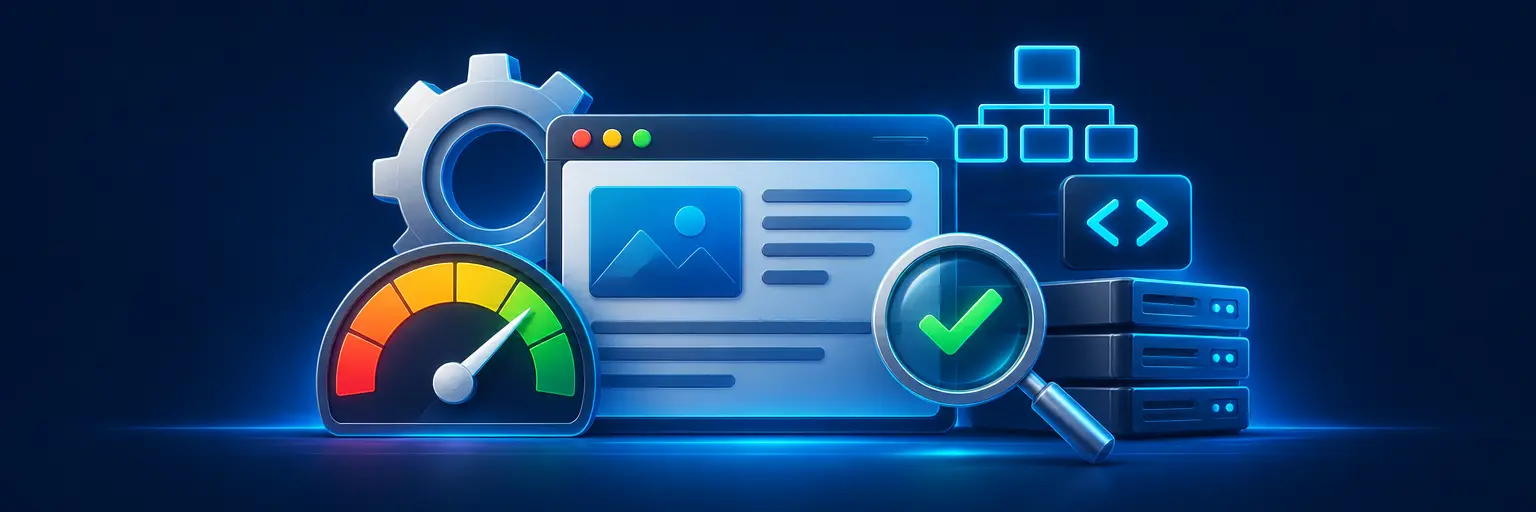
🐆 Website Speed Optimization
Speed is both a ranking factor and a user satisfaction metric. This subcategory offers a step-by-step plan to accelerate your website: optimize images (WebP, lazy loading), minify CSS/JS/HTML, leverage browser caching, and reduce render-blocking resources. We also cover critical CSS, preconnects, and async loading for scripts. Expect practical, code-level fixes for WordPress and other CMS platforms, plus tips on using tools like PageSpeed Insights and GTmetrix to track improvements and pass Core Web Vitals thresholds.
🛡️ Website Security Beyond HTTPS (CSP, etc.) and SEO
Security doesn’t stop at SSL. This subcategory explores Content Security Policy (CSP), HTTP security headers (HSTS, X-Frame-Options), and how they impact crawling and rendering. We explain how to implement CSP without breaking inline scripts or styles, and how security headers can prevent malicious injections that hurt your rankings. You’ll also learn about DDoS protection, malware scanning, and using Google Safe Browsing to monitor for blacklisting—ensuring your site remains trustworthy to both users and search engines.
Frequently Asked Questions
What is the difference between crawlability and indexability?
Crawlability refers to a search engine bot’s ability to access your pages via links and robots.txt rules. Indexability means the page is eligible to appear in Google’s index after being crawled. You can have a crawlable page that’s blocked by a noindex tag, or an indexable page that bots never find due to broken links. Both are essential for SEO.
How often should I update my XML sitemap?
Update your XML sitemap whenever you publish, delete, or change the priority of any page. For most sites, updating after new content or major changes is sufficient. Submit your sitemap in Google Search Console and monitor for errors. Dynamic sitemaps that automatically reflect new URLs are an efficient choice for blogs or large e-commerce stores.
Can JavaScript-heavy sites rank well in Google?
Yes, if you implement proper JavaScript SEO techniques like prerendering, SSR, or dynamic rendering. Google can execute JavaScript, but it’s slower and error-prone. Ensure critical content is in the initial HTML response, test with the Rich Results Test, and use hydration carefully. SPAs can rank well if they use path-based routing and include meta tags.
Is Core Web Vitals the only mobile ranking factor?
No, Core Web Vitals are one signal among many, including mobile-friendliness, safe browsing, and mobile-specific usability. However, CWV directly affect user experience, so poor LCP, FID, or CLS can lower your rankings even if other factors are fine. Prioritize CWV alongside responsive design and fast loading.
How do I choose between a subdomain and a subdirectory for international SEO?
Subdirectories (example.com/fr/) are generally easier to manage because link equity concentrates on your root domain. Subdomains (fr.example.com) can work but often require extra work for hreflang and canonicalization. Use ccTLDs (example.fr) only for strong local branding, but expect higher maintenance. For most, subdirectories with hreflang tags are the SEO-friendly choice.
Related topics