
Content Strategy & SEO
Read more about this topic
Unlock the true potential of your online presence with a content strategy engineered for search engine success. While technical tweaks matter, it’s your content that fuels rankings, earns links, and converts visitors into loyal customers. This is where we transform raw ideas into a SEO powerhouse—moving beyond simple blog posts to a systematic, data-driven approach. From strategic content planning and editorial calendars that keep you consistent, to smart promotion tactics that amplify your reach, we cover every angle. We dive deep into content audits to identify what’s underperforming and how to fix it, plus repurposing and optimization techniques that squeeze maximum value from every piece you create. Stop guessing and start building a sustainable, organic traffic machine that dominates your niche. Whether you’re a small business owner, blogger, or digital marketer, our proven framework aligns your words with search intent, boosts your click-through rates, and strengthens your domain authority. Ready to turn content from a chore into your most potent SEO asset? Let’s craft a roadmap that ranks.
7 articles
4 subtopics

Articles in Content Strategy & SEO
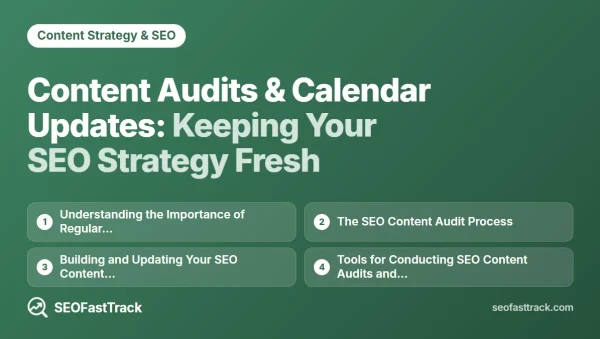
Content Audits & Calendar Updates: Keeping Your SEO Strategy Fresh
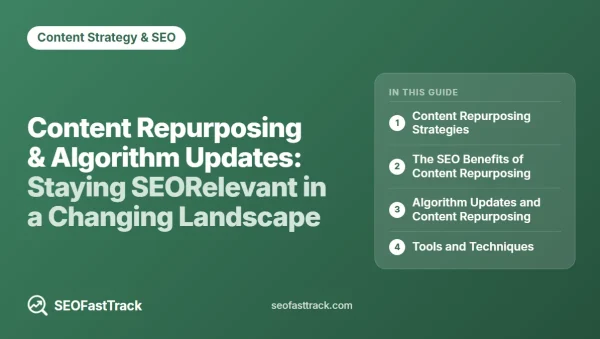
Content Repurposing & Algorithm Updates: Staying SEORelevant in a Changing Landscape

Social Media SEO Booster: Promoting Your Content on the Right Platforms
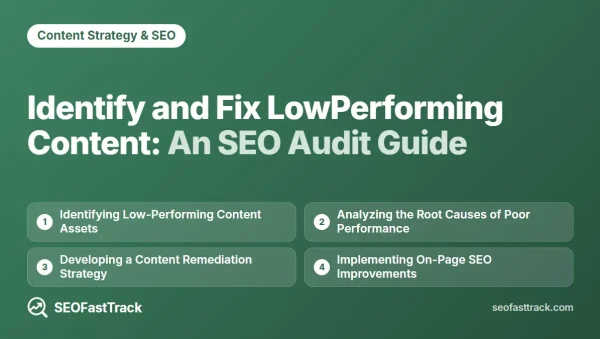
Identify and Fix LowPerforming Content: An SEO Audit Guide

Content Planning & SEO: Aligning Your Content with Search Engine Algorithms
From Chaos to Clarity: Mastering Content Planning for SEO Domination
Content Strategy & SEO: Build a Content Engine That Ranks
On SEOFastTrack, our Content Strategy & SEO hub is your blueprint for turning words into web traffic. Here, you’ll master the art of creating, organizing, and promoting content that both Google and your audience will love. Whether you’re a solo blogger or a small business owner, these guides cover the full content lifecycle—from planning and auditing to repurposing every asset for maximum search visibility. Dive in to transform your editorial efforts into a measurable, rank-boosting machine.
📅 Content Planning and Calendars for SEO
This subcategory is your command center for consistent, SEO-driven publishing. You’ll learn how to build a content calendar that aligns with keyword research, seasonal trends, and buyer intent. Expect practical templates for mapping topics to funnel stages, avoiding cannibalization, and balancing evergreen and news-driven pieces. By planning ahead, you ensure every post serves a strategic purpose, making it easier to achieve topical authority and earn backlinks from other sites. Consistency is key—this section shows you how to schedule and execute without burnout.
📣 Content Promotion Strategies for SEO
Great content doesn’t rank on its own; it needs amplification. Here, we dive into off-page tactics that directly boost your SEO performance, such as outreach for digital PR, social media syndication, and email newsletter placements. You’ll also discover how to leverage influencer partnerships, community engagement on forums, and content communities like Reddit or GrowthHackers. Effective promotion drives clicks, dwell time, and shares—all signals that tell Google your content deserves a higher position. Learn to balance paid and organic distribution for a robust traffic surge.
🔍 Content Audits for SEO Improvement
Before creating new material, audit what you already have. This subcategory teaches you a step-by-step method to inventory your posts, identify underperforming pages, and spot opportunities for merger or rewrite. You’ll use data from Google Search Console to find keywords where you rank on page two—content that could easily leap to page one with a refresh. Audits reduce wasted crawl budget and boost overall domain strength. We’ll show you how to prioritize high-value pages, fix broken internal links, and update thin content to match newer search intent.
🔄 Content Repurposing and Optimization for SEO
Why create from scratch when a single idea can generate ten assets? Here, we cover how to transform a blog post into a YouTube script, an infographic, a podcast episode, or a LinkedIn carousel. Repurposing multiplies your keyword reach and earns natural backlinks from different platforms. We also explore on-page optimization techniques—such as adding FAQ schema, improving meta descriptions, and optimizing image alt text—to squeeze more ranking power from existing pages. Every repurposed asset reinforces your topic authority and keeps your site fresh in Google’s eyes.
Frequently Asked Questions
How often should I update my content calendar for best SEO results?
Review your calendar weekly for flexibility and monthly for strategy alignment. Seasonality and algorithm updates may require quick shifts. A quarterly deep-dive ensures your topic clusters still match search demand. Always keep buffer slots for breaking industry news or high-intent keyword opportunities that arise.
Can content promotion alone improve my rankings without backlinks?
Promotion indirectly boosts rankings by increasing traffic, engagement (dwell time, lower bounce rate), and shares. These behavioral signals can nudge your position, but high-quality backlinks remain the strongest ranking factor. Use promotion to attract natural links through visibility, not as a replacement for link building.
What is the most common mistake in content audits for SEO?
Failing to act on findings. Many marketers audit, label pages as "low priority," then never fix them. Instead, set a monthly goal to update three to five pieces. Another mistake is ignoring keyword cannibalization—where several posts compete for the same term. Consolidate those pages into one comprehensive guide.
How do I decide which posts to repurpose first?
Focus on your top 10% of performers—posts with steady traffic, high engagement, or strong backlinks. Also prioritize evergreen topics that remain relevant for years. For each chosen post, identify the primary keyword and then create a derivative asset targeting long-tail variations or visual search queries.
Should I delete low-performing content or keep it during an audit?
Never delete outright unless it’s spammy, plagiarized, or irreparably broken. First, see if you can rewrite, merge with another post, or redirect to a stronger sibling. Deleting removes any residual authority and backlink value. Only after a 301 redirect is set should you remove the URL from your sitemap.
Related topics