
Content Audits for SEO Improvement
Read more about this topic
Unlock your website’s true potential with a deep-dive content audit designed for measurable SEO improvement. This isn’t just a checklist—it’s a strategic teardown of every page, blog post, and asset you own. We analyze what’s driving traffic, what’s dragging you down, and where hidden opportunities lie. By spotting thin content, keyword cannibalization, broken internal links, and outdated information, we turn your site into a lean, authority-building machine. Perfect for small business owners and bloggers, this audit aligns your content with Google’s latest algorithms while boosting user engagement and conversions. Stop guessing—start ranking higher, faster, with clear, actionable steps that cut through the noise. Your content is your biggest asset; let’s make it work harder. 🚀 Optimize, refresh, and outperform your competition today.
1 article

Articles in Content Audits for SEO Improvement
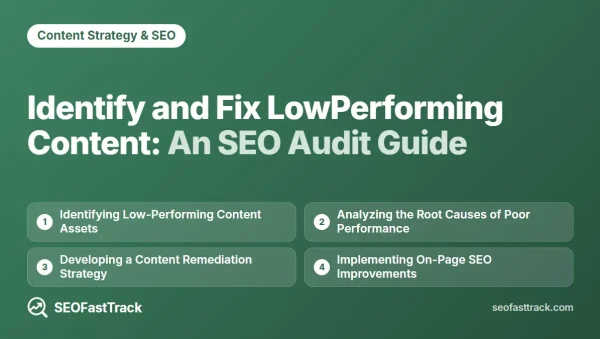
Content Audits for SEO Improvement: Unlock Your Website’s Full Potential
A content audit for SEO improvement is not just a checklist—it’s a strategic deep-dive into every page, blog post, and media asset on your site. By systematically evaluating your existing content against current search intent, keyword performance, and user experience, you can identify what’s underperforming, what needs refreshing, and what should be consolidated or removed. This subcategory of Content Strategy & SEO on SEOFastTrack gives you a repeatable framework to boost rankings, organic traffic, and conversions without starting from scratch. Below, we break down the most impactful facets of a successful content audit, packed with actionable insights for small business owners, bloggers, and digital marketers.
📊 Why Content Audits Are the Backbone of SEO Growth
Content audits reveal the hidden inefficiencies that drag your search rankings down. Instead of guessing which pages are failing, you’ll get a data-driven map of every URL’s traffic, engagement, bounce rate, and keyword position. For small businesses, this means reallocating effort from dead-end posts to high-potential topics that already have traction. A thorough audit also flags duplicate content, thin pages, and outdated information that Google’s algorithm may penalize. By prioritizing fixes, you can quickly recover lost rankings and build a stronger topical authority.
Furthermore, audits help you align your content with user intent—whether that’s informational, transactional, or navigational. When you categorise each page as “keep, improve, merge, or delete,” you create a clear roadmap that saves hours of wasted publishing. The result is a leaner, more powerful content library that ranks better and converts more visitors into leads or customers. For bloggers, this process turns a chaotic archive into a strategic asset that fuels consistent organic growth.
🔍 Step-by-Step Audit Process: From Crawl to Action Plan
Start by exporting your full URL list from Google Search Console, your sitemap, or an SEO crawler like Screaming Frog. Next, pull key metrics for each URL: page views, average time on page, backlinks, keyword rankings, and conversion rate if tracked. Then, group your content by pillar topic, target keyword, or sales funnel stage. Use a simple spreadsheet with columns for URL, title, meta description, word count, and performance scores. This initial inventory gives you a snapshot of your entire digital footprint, which is essential for spotting trends and outliers.
Once the data is organized, evaluate each piece against three core criteria: relevance to your business goals, search volume potential, and content quality. Mark high-value pages that might just need a meta refresh or internal link addition. Flag low-traffic pages with little backlink equity for consolidation into a single comprehensive guide. Delete or noindex pages that offer zero value and risk cannibalising your primary keywords. Finally, turn your spreadsheet into a prioritized action plan with deadlines, assigning tasks to writers or editors. This methodical approach ensures you don’t miss any quick wins or major structural fixes.
🛠️ Tools That Automate and Simplify Content Audits
You don’t need to manually analyse hundreds of pages—modern SEO tools accelerate the process significantly. Google Analytics and Search Console are free and provide core data like organic clicks, impressions, and average position. For a more granular view, tools like Ahrefs or SEMrush let you pull keyword difficulty, ranking fluctuations, and competitor data in one dashboard. Screaming Frog’s crawl capabilities detect broken links, duplicate titles, and missing meta tags instantly, which is a huge time-saver. Content-specific tools like Clearscope or Surfer SEO can even score existing articles against search intent, showing you exactly where to add related terms or improve readability.
Additionally, consider using a project management tool like Trello or Asana to track your audit findings and your team’s progress. For small business owners on a budget, a combination of free Google tools and a weekly manual review of your top 20 pages is still highly effective. The key is to pick a workflow that you’ll actually stick with—either a quarterly full audit or a monthly sprint on underperforming posts. By leveraging automation, you free up mental bandwidth to focus on the creative side of content refreshment, such as rewriting headlines or adding fresh examples that resonate with your audience.
✍️ How to Refresh and Repurpose Audit-Low Performers
After identifying low performers, the next step is to give them a second life rather than simply deleting them. Start by updating the title tag and meta description to include more compelling keywords and a clear value proposition. Then, rewrite the introduction to hook readers immediately and add a table of contents if the article is long. Incorporate recent statistics, screenshots, or case studies to increase trust and relevance. Also, improve internal linking by adding links to newer, related posts and pulling in high-authority external sources. This alone can boost the page’s perceived freshness and authority in Google’s eyes.
Repurposing is equally powerful—turn a tired listicle into an infographic, a video script, or a downloadable PDF checklist. For example, a blog post about “10 On-Page SEO Tips” can become a YouTube tutorial and a SlideShare presentation, each linking back to the original. This multi-format strategy captures different audience segments and extends the content’s lifespan. When merging multiple thin posts into one definitive guide, remember to set up 301 redirects from the old URLs to preserve any existing backlink equity. This consolidation not only improves user experience but also concentrates ranking power on a single, highly optimised page.
📈 Measuring Audit Success: KPIs and Ongoing Iteration
To know if your content audit is truly improving SEO, you need to track key performance indicators (KPIs) before and after your changes. Measure organic traffic growth, average keyword position, and the number of pages ranking on page one of Google. Also, monitor engagement metrics like time on page, scroll depth, and social shares—these signal whether readers find your refreshed content valuable. As you implement your action plan, check your Search Console performance report weekly for any spikes or drops. For small businesses, a 10-20% increase in organic sessions over one quarter is a solid win, while a decrease in bounce rate indicates better content match.
SEO is never a one-time project, so build a recurring audit cadence. Schedule a light audit every month (focusing on new posts and any declining pages) and a full audit every 3-6 months. Use the same scoring spreadsheet to compare progress over time. Don’t be discouraged if some refreshed pages don’t jump immediately—algorithm updates and content maturation take time. The real goal is continuous improvement: each audit cycle should uncover new opportunities to outrank competitors and better serve your audience. By making audits a habit, you turn SEO from a reactive firefight into a proactive growth engine.
Frequently Asked Questions
How often should I perform a content audit for SEO?
For most small business sites, a full audit every 3 to 6 months works well, but you should also run a quick monthly check on your top 10-20 pages. This cadence catches new issues like algorithm penalties or broken links early. If your site publishes content daily, consider a lighter weekly review of new posts to ensure they meet quality and keyword standards before indexing.
What is the difference between a content audit and a website audit?
A content audit focuses specifically on your text, images, videos, and downloadable assets—their quality, relevance, and SEO performance. A website audit covers everything technical, such as site speed, mobile responsiveness, crawl errors, and schema markup. Both are complementary, but a content audit answers “what should we say and improve?” while a technical audit answers “can search engines access and render it?”
Can I delete low-performing blog posts without hurting my SEO?
Yes, but only if they truly have no backlinks, no search traffic, and no relevance to your current niche. Before deleting, check if merging two or three thin posts into one comprehensive article is better. Always set up 301 redirects from deleted URLs to the nearest relevant page, preserving any link equity and avoiding 404 errors that could harm user trust.
What metrics matter most when prioritising content for an audit?
Focus on organic clicks, impressions, average position, and page-level backlinks. Pages with high impressions but low clicks might need a better title or meta description. Pages with high traffic but low conversion may need stronger calls-to-action. Also, track word count and content freshness—older posts often benefit from a refresh, even if traffic is currently stable.
How long does it take to see results from a content audit?
Some quick fixes, like updating meta tags and fixing broken links, can show a ranking improvement within 2-4 weeks. Larger changes, such as merging posts or rewriting 10,000-word guides, may take 2-3 months to fully influence search results because Google needs time to recrawl and reindex. Consistency matters more than speed—stick to your plan and monitor changes quarterly.
Related topics