Local Link Building Strategies
Read more about this topic
Discover the power of local link building strategies to skyrocket your business’s visibility in local search results. 🌍 For small business owners, bloggers, and digital marketers, earning high-quality, location-specific backlinks is the secret sauce to dominating Google’s local pack and organic rankings. By focusing on neighborhood citations, community partnerships, and local sponsorships, you can build a robust link profile that signals trust and authority to search engines. These strategies go beyond generic link building—they leverage local directories, chamber of commerce listings, and geo-targeted content to attract relevant traffic that converts. Whether you’re targeting “near me” searches or aiming to outrank competitors in your city, a well-executed local link strategy boosts your domain authority, enhances your Google Business Profile, and drives foot traffic. 🚀 Stay ahead with actionable tactics like guest posting on local blogs, partnering with nearby influencers, and creating localized resources that earn natural backlinks. Don’t let your competitors reap the rewards—unlock the full potential of your local SEO today!
2 articles
Articles in Local Link Building Strategies
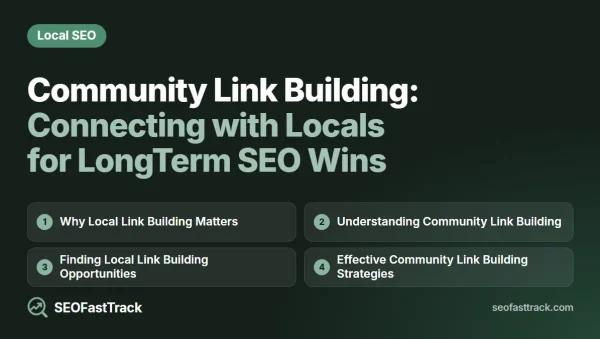
Community Link Building: Connecting with Locals for LongTerm SEO Wins
Local Link Building Strategies: Dominate Your Neighborhood Search Results
Welcome to the Local Link Building Strategies subcategory, part of our comprehensive Local SEO guide at SEOFastTrack. This section is your tactical playbook for earning high-quality backlinks from local sources that boost your business’s visibility in map packs, local organic results, and city-specific searches. Unlike generic link building, local links focus on geographic relevance and community trust, which are powerful ranking signals for Google’s local algorithm. Here, you’ll discover actionable methods to build relationships with local organizations, media, and influencers, transforming your website into a neighborhood authority.
📇 Local Citations and Business Directories: The Foundation
Local citations are mentions of your business name, address, and phone number (NAP) on third-party websites. They are the bedrock of local link building because they establish consistency and trust with search engines. Start by ensuring your NAP is identical across top platforms like Google Business Profile, Yelp, Bing Places, and Apple Maps. Then, expand to local chamber of commerce directories, city-specific business lists, and niche industry directories relevant to your area. Each accurate citation acts as a lightweight backlink, reinforcing your local relevance without requiring heavy outreach.
Beyond just listing, prioritize quality over quantity. A link from your local university’s business directory or a well-established community portal carries more authority than dozens of spammy directories. Use tools like Moz Local or BrightLocal to audit your current citations and identify gaps. Remember, consistent NAP data also improves your chances of appearing in the "near me" searches that drive local foot traffic and phone calls. This foundational step is non-negotiable for any local SEO campaign aiming for long-term stability.
🤝 Community Sponsorships and Local Events
Sponsoring local events, sports teams, charity runs, or school fundraisers is a powerful dual-purpose strategy: you gain a backlink and build genuine community goodwill. When you sponsor, request a link from the event’s website, usually placed in a "Sponsors" or "Partners" section. Many local nonprofits also list donors on their sites, offering high-context, relevant links that signal your business is actively involved in the area. This approach works exceptionally well for small businesses like restaurants, plumbers, and dental clinics because it humanizes your brand.
To maximize impact, choose events whose audience aligns with your customer base. For example, a local 5K race is perfect for a running shoe store, while a school science fair suits a tutoring center. Don’t overlook smaller hyper-local events like neighborhood block parties or farmers’ markets—these often have higher engagement and less competition. After the event, share photos and a recap blog post on your site, then link back to the event organizer. This creates a reciprocal relationship and encourages them to keep your link live for future events.
🎯 Building Relationships with Local Bloggers and Influencers
Local bloggers, food critics, lifestyle influencers, and even micro-influencers can provide powerful contextual links and exposure. Instead of mass emailing, focus on building genuine relationships first. Follow their content, engage with their posts, and attend events where they’re present. When you do reach out, offer value beyond a link request—such as a free product sample, a behind-the-scenes tour, or an exclusive discount for their audience. This makes your pitch feel like a partnership, not a transaction. A single review or feature from a trusted local voice can drive significant referral traffic and improve your domain authority.
Look for bloggers who cover topics adjacent to your industry, such as local travel guides, food roundups, or "best of" lists. Pitch a unique story angle that makes you stand out—perhaps your business’s history, a community initiative you’re leading, or a niche service you offer. Encourage them to include a dofollow link to your website, but also accept nofollow links, as they still provide visibility and referral traffic. Track your outreach in a spreadsheet, and always send a thank-you note. Long-term relationships with local influencers can yield ongoing backlinks every time they update their content.
🏢 Local Industry Partnerships and Cross-Promotions
Partnering with complementary local businesses is a win-win for link building. For instance, a wedding photographer could partner with a local florist, venue, and bakery to create a "wedding resource" page on each other’s sites. Or a fitness studio could team up with a nutritionist and a sports apparel store for a "healthy lifestyle" guide. These partnerships allow you to swap links naturally, provide real value to your visitors, and strengthen your local ecosystem. Search engines recognize these interlinked clusters as signs of a vibrant local economy, often boosting rankings for all involved.
When structuring a cross-promotion, create dedicated landing pages that serve both audiences. For example, a jointly written blog post titled "5 Local Experts’ Tips for a Perfect Weekend in [City]" can include links to each partner’s site. Ensure the content is genuinely helpful, not just a link farm. Also, consider co-hosting events or webinars where both brands are promoted. This not only builds links but also expands your reach to their customer base, creating a compound effect. Always formalize the arrangement with a simple agreement outlining the links, content ownership, and duration.
🗞️ Local Press and Digital PR for Backlinks
Getting featured in local news outlets—whether on TV, radio, newspapers, or their online platforms—is a high-authority link that many local businesses overlook. To earn press, you need a newsworthy angle: a unique milestone (e.g., 10 years in business), a community initiative, a charity drive, or expert commentary on a local issue. Prepare a concise, well-written press release and send it to journalists covering your beat. Many local news sites have free submission forms for community announcements, though a personalized email to a specific reporter yields better results.
Digital PR further amplifies this by creating shareable assets—such as original research, a local consumer survey, or an interactive map of your city’s best spots. When you publish this data on your site, pitch it to local journalists; they often link to your page as their source. For example, a real estate agency could publish "The Cheapest Neighborhoods to Rent in [City]" and get picked up by a local news blog. This earns natural, high-quality backlinks that also position you as an industry thought leader. Remember to include a compelling headline and a downloadable summary for busy journalists.
Frequently Asked Questions
What is the difference between a local citation and a local backlink?
A local citation is any mention of your business’s NAP (name, address, phone) on the web, and it doesn’t always need to include a link. In contrast, a local backlink is a hyperlink from another local website pointing to your site. All backlinks are citations, but not all citations are backlinks. Both are important: citations establish consistency and trust, while backlinks pass more direct authority and referral traffic.
How many local backlinks do I need to rank in the map pack?
There is no fixed number, but a healthy local link profile typically features 20-50 high-quality local backlinks from diverse sources like directories, community sites, and local news. Quality and relevance matter more than quantity. A single link from your local chamber of commerce or a respected newspaper can outrank dozens of low-quality directory links. Focus on consistent, authoritative links over time.
Can I use paid directories for local link building?
Yes, some reputable local directories charge a fee, such as the local Chamber of Commerce or specific industry publications. Paid directories can be valuable if they are well-curated and have strong domain authority. However, avoid low-cost or free directories that are spammy, as they can harm your SEO. Always check for dofollow links and genuine user engagement before paying.
How do I find local bloggers and influencers in my area?
Search on social platforms using hashtags like #YourCityBlogger or #LocalEats, and use Google with queries like "best [your city] blogs" or "top [your industry] influencer [your city]." Also, check local business directories, event pages, and social media groups. Tools like BuzzSumo or Ahrefs can filter by location. Engage with their content for a few weeks before reaching out to build rapport.
Should I prioritize dofollow or nofollow local links?
Prioritize dofollow links because they pass more link equity and are stronger ranking signals. However, don’t ignore nofollow links from high-visibility local sites like news websites or major directories. They still provide referral traffic, brand awareness, and diversity in your link profile, which Google appreciates. A mix of both looks natural and is safer than pursuing all dofollow links, which can seem manipulative.
Related topics