Measuring Link-Building Success
Read more about this topic
Measuring link-building success goes beyond just counting backlinks—it’s about understanding how those links impact your search rankings, organic traffic, and domain authority. With the right metrics, you can pinpoint which strategies actually move the needle and which ones waste your time. Key indicators include referring domain quality, anchor text diversity, and conversion rates from referral traffic. Tools like Google Search Console and Ahrefs help you track link growth velocity and page-level authority over time. Remember, a successful link-building campaign isn’t just about volume—it’s about relevance, trust, and sustained organic visibility. By monitoring changes in keyword positions and branded search volume, you can directly correlate link acquisition with business outcomes. Avoid vanity metrics like total backlinks or Domain Rating alone; instead, focus on ROI-driven KPIs such as new leads or sales attributed to organic sessions. Whether you’re auditing your own efforts or benchmarking against competitors, a data-backed approach ensures every link you earn contributes to long-term SEO growth.
1 article

Articles in Measuring Link-Building Success
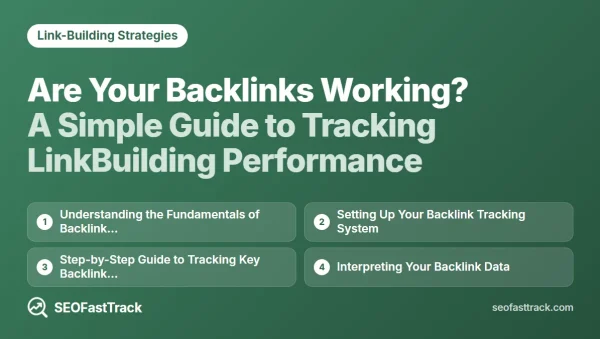
Measuring Link-Building Success: Turn Metrics into Growth
Link-building is only half the battle—knowing whether your efforts actually move the needle is what separates effective SEO from guesswork. In this subcategory of Link-Building Strategies, we dive deep into the analytics, KPIs, and reporting frameworks that let you track, evaluate, and optimize your backlink profile. From domain authority shifts to referral traffic quality, you’ll learn to measure not just quantity, but the true impact of every link. Whether you’re a small business owner, blogger, or digital marketer, this guide transforms raw data into actionable decisions, ensuring every outreach campaign earns its keep.
📈 Core KPIs: What to Track First
Before diving into expensive tools, you need a baseline of essential metrics. Focus on referral traffic, domain authority (DA), page authority (PA), and keyword rankings for pages that received new links. These four indicators reveal immediate signals: are visitors coming? Is your site’s perceived trust rising? Are your target terms climbing? Track these weekly using Google Analytics and free SEO extensions. Ignore vanity metrics like total backlinks—instead, measure linking root domains and contextual relevance. This prevents wasted effort on low-quality directories while highlighting which outreach tactics actually resonate with your audience.
Also, monitor anchor text distribution and new vs. lost links monthly. Sudden spikes in lost links could signal a site cleanup or a penalty. Set up alerts in Google Search Console for rapid detection. By focusing on these core KPIs, you build a solid foundation for deeper analysis without overwhelming yourself with data overload. Remember, consistency beats complexity—pick 5-7 metrics and review them on a fixed schedule, not ad hoc.
🔍 Tools & Platforms: From Free to Enterprise
No single tool measures everything. Start with Google Analytics and Google Search Console—both free and essential for referral traffic and indexed backlink data. For deeper insights, use Ahrefs or SEMrush to track backlink growth, toxicity scores, and competitor comparisons. These platforms offer “Link Intersect” features that reveal where rivals get links you don’t. For budget-conscious users, Ubersuggest provides basic metrics, while Moz Link Explorer excels at DA tracking. Don’t forget Majestic for Trust Flow and Citation Flow—great for spotting unnatural patterns. Every tool has unique data sources, so cross-reference at least two to validate accuracy.
More advanced setups integrate Looker Studio or Power BI to unify link data with traffic and conversions. This lets you create custom dashboards that answer “which links actually generate leads?”—not just pageviews. For agencies, oTranscribe or Linkody automate white-label reporting for clients. The key is not to buy every subscription immediately; start with a 14-day trial, export sample reports, and see which metrics align with your business goals. Automation is a bonus, but human interpretation remains irreplaceable.
🏆 Victory Metrics: Beyond Raw Numbers
Raw link counts mean little if they don’t drive business outcomes. Shift focus to conversion rate, time on site, and pages per session from referral traffic. A single link from a niche industry blog that sends 50 visitors—where 5 become paying customers—outscores a thousand links from spammy directories. Also, track branded search volume growth, as quality links often spark curiosity searches. Use UTM parameters on outreach links to attribute conversions precisely. Additionally, watch rank velocity for high-value keywords—if a money page jumps from page 2 to top 3 within a month, your link strategy is working.
Don’t overlook local SEO impact if you’re a small business; links from local chambers, news, or community blogs should boost Google Business Profile performance. Another subtle victory metric is indexation rate—how quickly search engines crawl and rank your newly linked pages. If pages remain unindexed after weeks, your link’s context may be weak. Finally, compare your link growth against top-ranking competitors’ growth. If you outpace them in DA but not in rankings, revisit your on-page optimization. True victory is a balanced scorecard of traffic, trust, and transactions.
🛠️ Refining Strategy with Data
Measuring is useless unless you act on insights. After 30 days of data, segment your links by source type (guest posts, digital PR, directories) and compare performance. If guest posts yield high DA but low referral traffic, pivot to niche podcasts or resource pages that drive engaged visitors. Use A/B testing on anchor text—try exact-match vs. branded anchors to see which improves rankings without triggering spam filters. Also, analyze link placement: a link in the first paragraph performs better than a footer link. Use highlighted keywords to spot underperforming pages that need internal linking support to maximize new link equity.
Implement a quarterly audit where you remove or disavow toxic links flagged by tools. Data can reveal patterns like links from countries unrelated to your audience—those often bring zero value. For outreach, track response rates and conversion rates per template; if a certain pitch gets 20% positive replies, expand on that angle. Ultimately, treat measurement as a feedback loop: measure → hypothesize → test → refine. Document findings in a spreadsheet to avoid repeating mistakes. This systematic approach turns link-building from guesswork into a predictable growth engine.
📊 Reporting & Communicating Results
Whether you report to clients, managers, or yourself, clarity is key. Build a monthly report with three sections: Performance Snapshot (KPIs vs. goals), Link Acquisition Summary (new, lost, toxic), and Business Impact (leads, revenue, rankings). Use visual graphs from Looker Studio or simple Excel charts—line graphs for trends, bar charts for comparisons. Avoid jargon; instead of “DR increased by 5,” say “Our site’s trust score rose, correlating with a 15% jump in organic traffic.” Include win stories like “the New York Times link brought 200 visitors and 10 newsletter signups.”
For non-technical stakeholders, create a one-page executive summary with traffic and conversion numbers. For team leads, provide granular data on outreach success rates and cost-per-acquisition. Don’t forget to set next month’s targets based on historical performance—realistic goals prevent disappointment. Use comments in reports to explain anomalies, such as seasonal drops or algorithm updates. If you’re a solo blogger, create a simple journal to reflect on what worked, what flopped, and why. This practice not only improves strategy but also builds confidence in your SEO investments.
Frequently Asked Questions
How long before I see measurable results from link-building?
Typically 2-4 weeks for referral traffic and indexing, but ranking shifts for competitive keywords may take 3-6 months. If you’re targeting low-competition terms, you might see movement in 2-3 weeks. Consistency matters—one good link per week outperforms a burst of 50 then silence. Use weekly checks for early signals and monthly reviews for trend analysis.
What is the single most important metric to track?
Referral traffic is the proof of actual user interest, but if you have no traffic yet, track domain authority as a proxy. For revenue-focused businesses, conversions from referral traffic is king. Honestly, no single metric suffices—pair referral traffic with keyword ranking improvements for the linked page to get a complete picture.
Should I disavow low-quality links immediately?
Only disavow if you receive a manual penalty or see a significant drop in rankings. Google’s algorithm now ignores most spammy links, so manual disavow can be unnecessary. Use the Disavow Tool sparingly—submit a list only after confirming toxic patterns in Ahrefs or Majestic. Wait 2 weeks after submission to see if rankings recover.
How do I set realistic targets for link-building KPIs?
Benchmark against your top 5 competitors. Use Ahrefs to see their monthly new backlinks and DA growth rate. If a competitor gains 20 new domains monthly, aim for 15 or 10 if you’re smaller. Also, factor in your niche’s competitiveness—local business needs less than e-commerce. Start with a 10% monthly improvement over your own baseline, not someone else’s.
Can I measure link quality without paying for tools?
Yes, use Google Search Console’s “Links” report to see top linked pages and anchor text—it’s free. Check referral traffic in Google Analytics for engagement signals. Manually review linked pages: is the content relevant and do visitors stay? Use the “Disavow” file as a last resort, but rely on free metrics like bounce rate and pages per session to infer quality.
Related topics