Competitor Backlink Analysis
Read more about this topic
Unlock your rivals’ SEO playbook with competitor backlink analysis—the smartest shortcut to faster rankings and stronger domain authority. Instead of guessing which links work, you can reverse-engineer the exact backlinks driving your competitors’ success, then replicate or outdo them to win more organic traffic. This strategy reveals high-value guest post opportunities, niche directories, resource pages, and influencer partnerships you might have missed, while flagging toxic links to avoid. By studying link velocity, anchor text diversity, and referring domains, you’ll spot patterns that turn new prospects into proven link sources. Whether you’re a blogger, small business owner, or digital marketer, mastering this tactic saves time, boosts your outreach ROI, and accelerates your authority in Google’s eyes. Start with tools like Ahrefs or SEMrush, filter for relevant, high-authority domains, and focus on links that are both replicable and impactful. Remember: every backlink your competitor earned is a blueprint—use it to build a stronger, smarter link profile today.
2 articles

Articles in Competitor Backlink Analysis
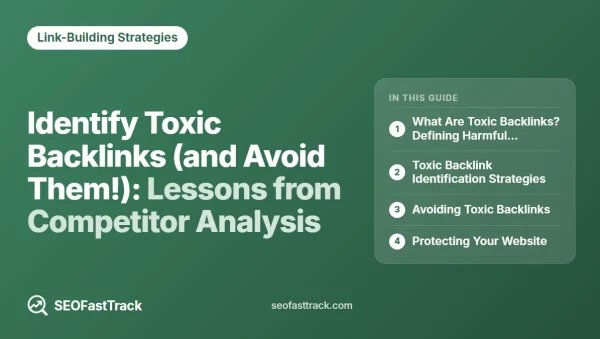
Identify Toxic Backlinks (and Avoid Them!): Lessons from Competitor Analysis
Unlock Your Rival’s SEO Blueprint with Competitor Backlink Analysis
For small business owners, bloggers, and digital marketers, building authority often feels like a guessing game. Competitor Backlink Analysis changes that. Instead of prospecting from scratch, you systematically reverse-engineer the exact links that power your rivals’ rankings. By dissecting their earned, built, and natural backlinks, you can replicate their success, discover untapped digital PR angles, and leapfrog your competition in search results. This subcategory of Link-Building Strategies focuses on actionable audit workflows, tool selection, and gap analysis to turn competitor data into a repeatable growth engine.
🔍 Step-by-Step Audit Workflow for Backlink Discovery
You’ll learn how to move from raw data to a prioritized action list. We cover how to choose the right competitor set (direct SEO rivals, not just business rivals), export their link profiles, and filter out toxic or irrelevant domains. The process includes segmenting links by anchor text, referring domain age, and page type to find patterns that actually move rankings. You’ll also see how to identify “linkable assets” on their site—like stats pages or ultimate guides—that earn links naturally.
Practical checklists help you avoid common mistakes, such as chasing low-quality directories or ignoring nofollow links that still drive referral traffic. With a repeatable weekly audit routine, you can track new competitor backlinks as they appear and respond faster than your niche’s average. The goal is not to copy blindly, but to build a strategic map of the digital neighborhoods where your rivals have authority—then earn your own mentions there.
🧰 Best Tools for Backlink Gap Analysis and Data Export
Choosing the right toolkit is half the battle. We break down free and paid options: Ahrefs, SEMrush, Moz Link Explorer, and Ubersuggest, plus niche tools like CognitiveSEO. You’ll learn exactly which metrics matter—Domain Rating (DR), URL Rating (UR), referring IPs, and link velocity—and how to export clean CSV files for manual analysis. We also compare SERP-based free methods, such as Google Search Console queries and “intitle:” tricks, for budget-conscious bloggers.
Beyond the main giants, we highlight hidden gems like Monitor Backlinks for real-time alerts and Pitchbox for outreach after discovery. For each tool, you get a mini-tutorial on extracting the “Links lost” and “New links” filters, which reveal where your competitor is gaining or losing authority. This section ensures you never overpay for overlapping features and always have a clear export protocol that integrates with your CRM or spreadsheet.
🕸️ Content Gap Strategy: Turning Their Links Into Your Topics
Every backlink points to a specific page. Analyzing that page’s title, format, and content depth reveals what the link-worthy resource looks like in your niche. We teach you how to cluster those pages by topic pillars—like “statistics,” “tutorials,” or “case studies”—and then create superior assets. For example, if your competitor gets links to a 2,000-word guide on local SEO, you can build a 4,000-word interactive hub with downloadable templates and original research.
This is not just about writing longer content. It’s about identifying the underlying need that made other sites link out. Maybe they needed a quote, a data source, or a visual infographic. You’ll learn to use “link quality scoring” to prioritize which content gaps to fill first, based on the number of referring domains and the authority of those sources. The result is a content calendar directly informed by demand signals, not guesswork.
🏢 Digital PR and Outreach Angles Derived from Rival Links
Backlink analysis isn’t just for SEO tools—it’s a goldmine for PR pitches. When you see a competitor’s link from a popular industry blog, you can reverse-engineer what the blogger found valuable. We show you how to extract the exact outreach email patterns that worked for competitors by studying the anchor text and surrounding context. You’ll also learn to use “link reclamation” tactics: if a competitor’s link broke (404 error), you can offer your updated resource to the same publisher.
We cover building a “prospect list” from your competitor’s referring domains and then segmenting it by domain authority, organic traffic, and niche relevance. For each segment, we provide sample email templates that focus on mutual benefit rather than naked link requests. You’ll also learn to monitor journalist requests via Help a B2B Writer or HARO, which often mirror the topics that already earned your competitor links. This transforms link building from cold outreach into warm, data-driven relationship building.
📊 Tracking ROI and Measuring the Impact of Your Analysis
No strategy is complete without measurement. You’ll see how to set up a baseline snapshot of your backlink profile and compare it against your competitor’s after 30, 60, and 90 days. We explain how to track keyword ranking shifts for pages that gained “copycat” links, using tools like Google Search Console and Rank Tracker. You’ll also learn to calculate the true value of each link—estimated visits, conversions, and referral traffic—to justify your efforts to clients or stakeholders.
We introduce a simple scorecard model that tracks four metrics: net new referring domains, average DR of acquired links, organic page growth, and time to first ranking improvement. With this dashboard, you can quickly see which competitor-derived tactics are working and which should be abandoned. The goal is to prove that competitor backlink analysis is not a one-off audit, but a continuous, compounding investment in your site’s authority.
Frequently Asked Questions
Is competitor backlink analysis legal and ethical?
Yes, it is completely legal and standard practice in SEO. You are analyzing publicly available data about other websites’ links. Ethically, you should use this information to create better content and outreach, not to copy or duplicate their assets. All major SEO tools offer this feature, and it’s a recommended practice by Google’s own guidelines for competitive research.
How often should I perform a competitor backlink audit?
For most small businesses, a monthly audit is sufficient. However, if you are in a fast-moving niche like news or affiliate marketing, you may want to do a weekly check of “new links” to catch trends early. Using automated alerts from tools like Ahrefs or SEMrush can save time, but a manual monthly deep dive helps spot content gaps and broken link opportunities.
Which metrics matter most when comparing backlink profiles?
The most important metrics are referring domains (unique sites linking), domain authority of those referring sites, and the relevance of the linking page to your niche. While total backlinks count is useful, quality and diversity of referring domains are stronger ranking indicators. Also, track anchor text distribution to avoid over-optimization risks.
Can I use competitor backlink analysis for local SEO?
Absolutely. For local businesses, focus on competitors within your geographic service area. Analyze their links from local directories, chamber of commerce sites, newspapers, and local blogs. Tools like Whitespark or BrightLocal can help filter by geo-modifiers. Replicating those local links can quickly boost your Google Business Profile and local pack rankings.
What if my competitors have far more authority than me?
Start small. Look for gaps in their lower-authority links—pages with DR below 30 that you can realistically earn from too. Target “easy wins” like unpaid directory listings, niche article submissions, or local sponsorships. As your authority grows, climb up to higher-DR links. Remember, you only need to outperform the next site above you, not the market leader overnight.
Related topics