Ethical Link Building for Long-Term Growth
Read more about this topic
Ethical link building is the cornerstone of sustainable SEO success, focusing on earning high-quality backlinks through genuine relationships, valuable content, and transparent practices—not shortcuts or manipulative tactics. This approach aligns perfectly with Google’s guidelines, ensuring your site climbs rankings steadily while building lasting authority and trust. By prioritizing relevance, authority, and user value, you’ll attract natural links that withstand algorithm updates and deliver compounding organic growth over time. Whether through digital PR, expert outreach, or creating shareable resources, ethical strategies turn your website into a go-to resource, reducing reliance on risky paid or spammy methods. Perfect for small business owners, bloggers, and digital marketers who want long-term, resilient rankings without penalties, this guide demystifies how to build a robust backlink profile that fuels consistent traffic, brand visibility, and credibility. Embrace a mindset of earning links by being useful—your future self (and your search rankings) will thank you. 🚀🔗
1 article

Articles in Ethical Link Building for Long-Term Growth
Ethical Link Building for Long-Term Growth
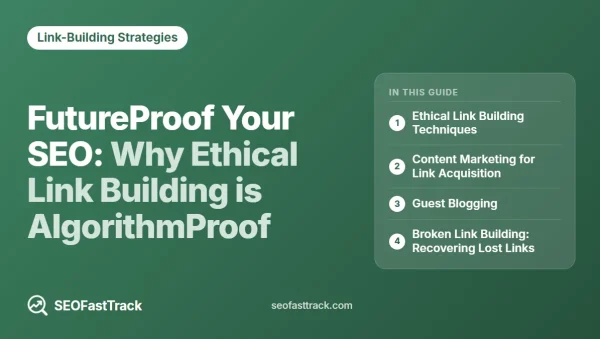
Welcome to the Ethical Link Building for Long-Term Growth subcategory, part of our Link-Building Strategies guide at SEOFastTrack. Here, we focus on sustainable, white-hat techniques that build your site’s authority without risking penalties from Google. Unlike quick-fix schemes, ethical link building prioritizes genuine relationships, valuable content, and user trust—ensuring your rankings climb steadily and stay resilient through algorithm updates. Expect actionable strategies, real-world examples, and a clear roadmap to earning links that compound over time, making your SEO investment truly future-proof.
📈 The Foundation of Earning High-Quality Editorial Links
Editorial links are the gold standard in ethical link building. These are links that other websites give you naturally because they find your content genuinely useful, not because you asked or paid. To earn them, your focus must shift from “getting links” to “being link-worthy.” This means creating original research, comprehensive guides, or unique tools that journalists and bloggers cannot ignore. Start by auditing your existing content for gaps, then produce something better than anything currently ranking. When your resource solves a problem thoroughly, outreach becomes a simple introduction rather than a pitch.
For small business owners, this often translates to publishing local case studies, industry surveys, or behind-the-scenes data from your operations. Every piece should include a clear takeaway or statistic that others can cite. As your reputation grows, you’ll notice a snowball effect—each new link makes the next easier to obtain. Remember, quality over quantity is non-negotiable; a single link from an authoritative site like Forbes or a niche industry portal carries more weight than dozens from low-tier directories. This foundation ensures your growth is built on rock, not sand.
🤝 Building Relationships Through Digital PR and Blogger Outreach
Digital PR is the art of securing coverage through storytelling and relationship-building, not begging for links. Begin by identifying journalists, bloggers, and influencers who cover your niche. Use tools like HARO (Help a Reporter Out) or Twitter/X searches to find their current questions. Craft pitches that offer exclusive data, expert commentary, or a unique angle—never send generic requests. The goal is to become a reliable source they return to repeatedly. After your first feature, maintain the connection with occasional comments, shares, or free access to your products, ensuring you’re top of mind for their next story.
For bloggers, collaborative content such as guest posts, co-authored studies, or expert roundups works wonders. When you write for others, ensure your byline links to a high-value page on your site, not just your homepage. Over time, these relationships can lead to unlinked mentions—which you can then request to be made clickable. Always personalize your outreach emails, mention their recent work, and keep your ask small and specific. This human-centric approach reduces rejection rates and fosters long-term partnerships, making your link profile look natural and varied to search engines.
🛠️ Leveraging Existing Assets: Competitor Link Gap Analysis
Your competitors’ backlinks are a goldmine of opportunities you haven’t yet tapped. Using tools like Ahrefs or SEMrush, run a link gap analysis to see which websites link to them but not to you. This reveals blogs, resource pages, and industry roundups that are already receptive to linking to your type of content. For each opportunity, examine why they linked to your competitor—was it a study, a tool, or a guide? Then create something at least 20% better. Your outreach to these sites should reference the existing link and explain why your updated version is more valuable for their readers.
Don’t stop there; analyze your own top-performing pages. Identify which of your assets attract the most organic traffic but few links—these are “link magnets” waiting to be promoted. Update them with fresh data, visuals, or interactive elements, then contact sites that mention similar topics without linking to any source. You can also reverse-engineer unlinked brand mentions (when someone talks about you without a link) and politely ask for that hyperlink. This systematic approach turns passive opportunities into active wins, ensuring your link growth aligns with your content’s true value.
🔗 Productive Guest Posting and Resource Page Link Building
Guest posting remains effective when done ethically—it’s about sharing expertise, not just acquiring a backlink. Target blogs with genuine readership and strict editorial standards, where your article must pass a review. Write content that stands alone as excellent, even without its backlink. Focus on niche-specific sites that your ideal customers read, not generic “write for us” pages with low authority. Your author bio can include a contextual link to a relevant page on your site, but the main value comes from referral traffic and brand exposure. Track which guest posts drive conversions, not just clicks.
Resource page link building involves finding curated lists of helpful tools, guides, or websites. These pages are common in education, SaaS, and B2B niches. Use Google search operators like “resource page” + “your niche” or “helpful links” + “your keywords.” For each resource page, check if your site would genuinely fit the list. Reach out with a polite suggestion, explaining exactly why your resource is missing and how it adds value for their readers. Always mention you won’t mind if they decline—pressure kills trust. A successful add is a long-term win, as resource pages are often highly authoritative and evergreen in their relevance.
💡 Creating Linkable Assets That Naturally Attract Backlinks
Linkable assets are cornerstone pieces of content designed to earn links without active solicitation. These include original statistics, interactive calculators, free tools, infographics, or comprehensive online guides. For example, a “2025 Small Business SEO Benchmarks” report based on your aggregated data will attract journalists who need credible numbers. Similarly, a free “Keyword Difficulty Checker” tool gets bookmarked and referenced by every blogger who uses it. The key is to solve a recurring problem in your industry with a resource that cannot be easily replicated. Format matters—make it visually appealing, fast-loading, and mobile-friendly.
Once created, promote your asset through niche forums, social media groups, and press releases. Semrush and similar platforms often feature new tools in their roundups, giving you instant authority. Also, consider repurposing your asset into other formats—a breakdown article, a video, or a slide deck—each with its own shareable URL. While you can’t force links, you can plant your asset in front of the right audiences. Over months, this earns passive backlinks as your resource becomes the “go-to” reference in your field, aligning perfectly with the long-term growth goal.
Frequently Asked Questions
What is the difference between ethical and unethical link building?
Ethical link building involves earning links based on merit, such as creating quality content, building relationships, and gaining organic mentions. Unethical methods include buying links, participating in link schemes, or using private blog networks (PBNs). Unethical tactics risk severe Google penalties, erasing all previous gains. Ethical strategies may take longer but offer sustainable, compound growth that withstands algorithm updates.
How long does it take to see results from ethical link building?
Typically, you may notice improvements within 2 to 4 months, but significant ranking shifts often take 6 to 12 months. This depends on your niche’s competition, the authority of linking sites, and your content quality. Consistency is key—spending dedicated efforts monthly on outreach and asset creation will accelerate results, while sporadic efforts delay progress. Patience and ongoing measurement are vital.
Can I do ethical link building without any SEO tools?
Yes, for basics. You can manually search for opportunities using Google, check competitor links via the “backlink” operator in search, and use browser extensions for metrics. However, tools like Ahrefs or Moz save hours, reveal valuable insights (like domain authority), and help monitor your progress. If your budget is tight, free versions of many tools suffice initially, but investing later will improve efficiency.
Do guest posts still work for SEO in 2025?
Yes, but only if you choose high-quality, relevant sites with real audiences. Google values contextual links within authoritative content. Avoid low-tier article directories or sites with heavy “do-follow” spam. Instead, target niche blogs with engaged readership and editorial guidelines. Guest posts also drive referral traffic and build your personal brand, making them worthwhile beyond simple link value.
How many backlinks do I need to rank well?
There is no fixed number—it’s about quality, relevance, and context. A single link from a high-authority site like Forbes can outweigh hundreds of low-quality ones. For competitive keywords, you may need links from 20-50 diverse, trusted sources. Focus on earning links from domains relevant to your niche and your target audience. Track your competitors’ “referring domains” to set realistic targets. Always prioritize repeat visibility over sheer quantity.
Related topics