Building Authority and Trust through Links
Read more about this topic
Building authority and trust through links is the cornerstone of any sustainable SEO strategy. Beyond simple rankings, earning high-quality backlinks signals to search engines—and your audience—that your content is a credible, valuable resource. When reputable sites link to you, it’s like a digital vote of confidence that boosts your domain authority, drives targeted referral traffic, and strengthens your brand’s reputation. In an era where Google prioritizes experience, expertise, authoritativeness, and trustworthiness (E-E-A-T), strategically acquiring links from relevant, authoritative sources isn’t just about climbing SERPs—it’s about establishing your site as a go-to industry leader. Whether through digital PR, guest contributions, or resource-worthy content, every meaningful link you earn builds a lasting asset that compounds your online influence and protects you against algorithm fluctuations. Ready to turn passive links into active trust signals? Focus on quality over quantity, relevance over reach, and relationships over shortcuts—your authority depends on it. 🚀🔗
2 articles

Articles in Building Authority and Trust through Links
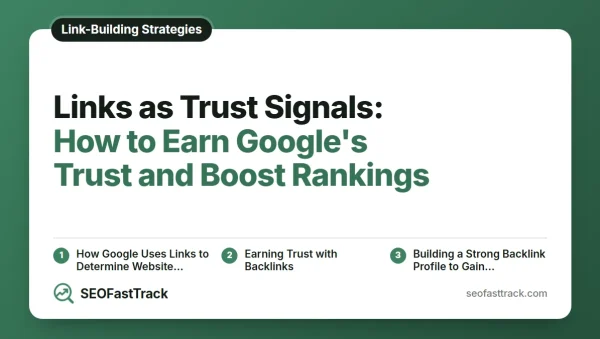
Links as Trust Signals: How to Earn Google's Trust and Boost Rankings
Building Authority and Trust through Links: Your Path to SEO Success
In the competitive world of search engine optimization, earning high-quality backlinks is more than just a numbers game—it’s about establishing your website as a credible, authoritative source. This subcategory dives deep into how strategic link-building can boost your domain authority, enhance user trust, and improve your search rankings. Whether you’re a small business owner, blogger, or digital marketer, you’ll discover actionable tactics to turn every link into a vote of confidence for your brand. Let’s explore the core pillars of this vital SEO strategy.
🔗 Understanding Domain Authority and Link Equity
Domain Authority (DA) is a metric that predicts how well your site will rank on search engines, largely influenced by the quality and quantity of inbound links. Link equity, or “link juice,” is the value passed from one site to another through hyperlinks, helping boost your pages’ visibility. By focusing on earning links from reputable, relevant sources, you signal to Google that your content is trustworthy and valuable.
This section clarifies how DA is calculated, why not all backlinks carry equal weight, and how to prioritize link acquisition for maximum impact. You’ll learn to audit your current backlink profile, identify toxic links that harm your authority, and build a sustainable strategy that grows your site’s credibility over time. Mastering this foundation ensures every future link-building effort pays off.
🛡️ Earning Trust with Editorial and Guest Posting Links
Editorial backlinks—natural links placed by other websites because they genuinely find your content useful—are the gold standard of link-building. Guest posting, when done right, is a powerful way to earn these links by providing value to a new audience while showcasing your expertise. This facet focuses on crafting pitches that editors accept, writing high-quality guest articles, and avoiding spammy outreach that damages your reputation.
You’ll discover how to identify authoritative blogs in your niche, personalize your outreach emails, and create content that solves real problems. By prioritizing relevance and user value over vanity metrics, you build a network of editorial links that position you as a thought leader and drive targeted referral traffic. This trust-based approach not only improves rankings but also fosters long-term relationships with industry peers.
📊 Leveraging Digital PR and Linkable Assets
Digital PR is the art of earning media coverage, mentions, and links through compelling stories, data, or resources. Linkable assets—like original research, infographics, interactive tools, or comprehensive guides—serve as magnets that naturally attract backlinks from journalists, bloggers, and industry influencers. This subcategory teaches you how to create assets that stand out and pitch them effectively to earn high-authority links.
By developing data-driven content that solves a unique problem or reveals surprising insights, you make it easy for others to cite you. This strategy goes beyond direct outreach, building a reputation that encourages organic link growth. Investing in linkable assets yields compounding returns, as every citation reinforces your authority and attracts even more linking opportunities over time.
🤝 Building Relationships for Sustainable Link Growth
Sustainable link-building isn’t about one-off transactions; it’s about cultivating genuine relationships with webmasters, bloggers, and industry experts. This facet explores how to engage with your community through social media, forums, and email conversations before ever asking for a link. By being helpful, sharing others’ content, and providing value first, you create a foundation of goodwill that makes future link requests natural and successful.
You’ll learn practical tactics like “skyscraper technique,” broken link building, and resource page outreach, all framed within a relationship-first mindset. This approach not only earns you links but also opens doors for collaborations, partnerships, and co-marketing opportunities. When your links come from trusted sources, they carry more weight, and your audience sees you as a connected, credible player in your field.
📈 Measuring Success and Avoiding Common Pitfalls
To build authority effectively, you must track your progress using key performance indicators like referring domains, organic traffic, and keyword rankings. This section covers essential SEO tools, such as Ahrefs, SEMrush, or Moz, to monitor your backlink profile, analyze competitor strategies, and identify new opportunities. You’ll also learn to set realistic goals and adjust your tactics based on data-driven insights.
Equally important is avoiding black-hat techniques like buying links, link farms, or excessive anchor text manipulation, which can trigger penalties and destroy trust. Instead, focus on white-hat methods that prioritize quality and transparency. By regularly auditing your links and staying updated with Google’s guidelines, you protect your website’s long-term reputation, ensuring that your authority grows steadily and safely.
Frequently Asked Questions
How many backlinks do I need to build authority?
There’s no fixed number; it’s about quality over quantity. A few links from high-authority, relevant sites can outperform hundreds of low-quality ones. Focus on earning consistent, meaningful links that drive referral traffic and enhance your domain’s trust. Aim for a steady growth of diverse referring domains rather than chasing a specific count.
What is the difference between dofollow and nofollow links?
Dofollow links pass link equity and help your search rankings, while nofollow links do not, but they can still bring traffic and exposure. A natural backlink profile includes both types. Earning nofollow links from authoritative sites like Wikipedia or Forbes still boosts your credibility, so don’t dismiss them entirely.
Can guest posting hurt my site’s authority?
Only if you use low-quality spam sites or over-optimize anchor text. When you guest post on reputable, relevant websites with unique, valuable content, it strengthens your authority. Avoid mass-producing thin articles or using exact-match anchors excessively. Quality guest posts on trusted sites are a cornerstone of effective link-building.
How often should I audit my backlink profile?
Perform a comprehensive audit every 3-6 months, or after any major Google algorithm update. Regularly check for toxic links, spammy directories, or suspicious patterns that could trigger penalties. Use tools like Google Search Console and Ahrefs to monitor new and lost links, and disavow harmful ones promptly to protect your authority.
Does link-building via digital PR require a big budget?
Not necessarily, but it does require time and creativity. You can start with small-scale assets like original surveys or simple infographics using free design tools. As you gain traction, reinvest any earnings into better research or outreach tools. Focus on storytelling and providing unique data to make your pitches irresistible to journalists.
Related topics