
SEO Project Management
Read more about this topic
SEO project management is the backbone of turning scattered optimization tasks into a streamlined, results-driven workflow. For small business owners, bloggers, and digital marketers juggling multiple priorities, effective SEO project management ensures every keyword, content update, and technical fix aligns with your broader SEO strategy—without missed deadlines or wasted effort. This discipline blends planning, team coordination, and performance tracking to keep your campaigns on schedule and your goals measurable. Whether you’re launching a new site, recovering from an algorithm update, or scaling organic growth, mastering SEO project management helps you prioritize high-impact actions, communicate progress clearly, and adapt swiftly to search engine shifts. In this guide, you’ll discover practical frameworks for setting milestones, allocating resources, and using analytics to steer your projects toward tangible ROI—so your SEO roadmap stays focused, agile, and profitable.
1 article

Articles in SEO Project Management
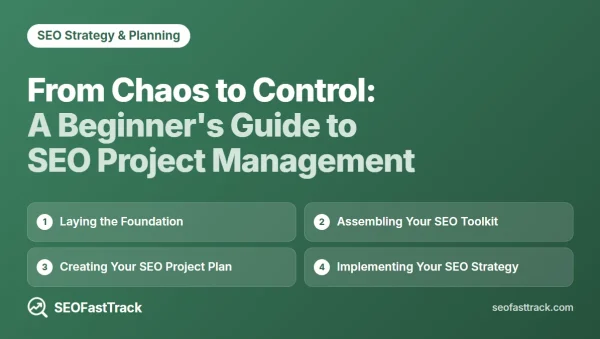
Mastering SEO Project Management for Sustainable Growth
SEO project management is the strategic backbone that turns scattered optimization tasks into a cohesive, results-driven workflow. For small business owners, bloggers, and digital marketers on SEOFastTrack, this subcategory bridges the gap between planning and execution—ensuring every technical audit, content update, and link-building campaign aligns with your broader SEO strategy. Here, you’ll learn how to prioritize tasks, allocate resources, track progress, and adapt to algorithm shifts without losing momentum. Expect practical frameworks, real-world templates, and time-saving tactics to keep your SEO projects on schedule, within budget, and visibly impacting rankings.
📋 Building a Scalable SEO Workflow
A scalable SEO workflow starts with clear documentation of your processes—from initial keyword research to post-launch performance monitoring. You’ll discover how to create repeatable task lists, assign owners, and set dependencies so your team never misses a critical step. This section covers agile sprints versus waterfall planning, helping you choose the right cadence for your content and technical updates.
Expect downloadable templates for project charters, task boards, and sprint retrospectives tailored to SEO. Learn to break down large initiatives like site migrations or core web vitals overhauls into manageable sprints. By standardizing your workflow, you reduce bottlenecks, improve cross-team communication, and make it easier to onboard new members—all while keeping your SEO goals front and center.
🧩 Prioritizing SEO Tasks with Impact vs. Effort
Not all SEO tasks are created equal. You’ll learn to score every action using an impact-versus-effort matrix, ranking quick wins like meta description rewrites against high-effort projects such as content hub builds. This section teaches you to say “no” to low-yield tasks and focus resources on changes that move organic traffic, conversions, and keyword visibility.
We’ll introduce the ICE scoring model (Impact, Confidence, Ease) and show you how to apply it to your backlog. You’ll also explore how to factor in dependencies, external deadlines, and algorithmic risk when prioritizing. By the end, you’ll have a transparent system that justifies every hour spent, making stakeholder buy-in for SEO initiatives much smoother.
📊 Tracking KPIs and Reporting Progress
Effective SEO project management relies on choosing the right key performance indicators—not just vanity metrics. Learn to set project-specific KPIs like time-to-first-index, crawl error reduction, or backlink acquisition rate, then map them to monthly reporting cycles. This section demystifies how to use Google Search Console, Ahrefs, and custom dashboards to visualize progress against your initial SEO strategy.
You’ll also discover best practices for executive-friendly reports that showcase ROI, risk areas, and next steps without drowning in data. We’ll cover weekly check-in rituals, sprint reviews, and how to pivot when a KPI underperforms. With clear metrics, you can prove the value of your project management approach and secure ongoing budget for future SEO campaigns.
🧠 Managing Stakeholders and Communication
SEO projects often involve developers, writers, designers, and executives—each with different priorities. This section provides communication frameworks to keep everyone aligned, from kickoff meetings to change requests. You’ll learn how to translate technical SEO jargon into business-friendly language so non-SEO stakeholders understand why a redirect map or schema update matters.
Expect practical tactics like status email templates, asynchronous update channels, and weekly 15-minute standups. We’ll also cover how to handle scope creep and conflicting opinions by tying every decision back to your documented SEO strategy. Strong communication reduces delays, prevents rework, and fosters a culture where SEO is seen as an integral part of product development rather than an afterthought.
🛡️ Risk Management and Algorithm Change Adaptation
Search algorithms change constantly, and your project plan must be resilient. Here, you’ll learn how to build contingency buffers for potential Google core updates, penalty risks, or technical failures. This section covers monitoring tools for algorithm fluctuations and pre-defined response playbooks for drops in rankings or traffic.
You’ll also explore how to perform post-mortems after any major SEO incident—documenting what went wrong, what worked, and what to adjust for future projects. By embedding risk assessment into your planning phase, you minimize disruption to your overall strategy. Expect frameworks for temporary rollback plans, content refresh schedules, and rapid testing protocols that keep your site stable even in volatile search environments.
Frequently Asked Questions
What is the difference between SEO project management and general SEO tactics?
SEO project management focuses on overseeing the entire lifecycle of SEO initiatives—planning, scheduling, resource allocation, and reporting—while general SEO tactics are specific actions like keyword optimization or backlink outreach. Project management ensures those tactics are executed on time, coordinated across teams, and aligned with strategic goals, whereas tactics alone may miss deadlines or duplicative efforts.
How do I handle scope creep in an SEO project?
Scope creep occurs when new tasks are added without adjusting timelines or budgets. You can handle it by documenting every request, assessing its impact on existing priorities, and formally approving changes through a change log. If a request isn’t critical, move it to a future sprint. Always refer back to your initial SEO strategy to justify what stays in scope.
What tools are best for SEO project management?
Popular tools include Asana, Trello, Jira, and Monday.com for task tracking, while specialized SEO platforms like SEMrush or Ahrefs offer project dashboards. For reporting, Google Looker Studio or Data Studio integrates with your analytics. Choose tools that support dependencies, time tracking, and custom fields to match your workflow, and avoid overcomplicating with too many platforms.
How often should I update my SEO project plan?
Update your plan at least weekly, ideally during a short sprint review. Major updates should happen monthly to reflect KPI changes, new algorithm insights, or team resource shifts. Daily updates are unnecessary unless you’re in a time-sensitive campaign. A living document—constantly reviewed but not overhauled—keeps everyone aligned without exhausting the team.
Can SEO project management work for a solo blogger?
Absolutely. Even a solo blogger benefits from simple task boards or a calendar that separates keyword research, drafting, meta optimization, and link outreach. Project management here is about time management and self-accountability. Use a lightweight tool like Notion or even a spreadsheet to track priorities, deadlines, and post-publishing performance, ensuring you follow through on your own SEO strategy.
Related topics