
From Chaos to Control: A Beginner's Guide to SEO Project Management

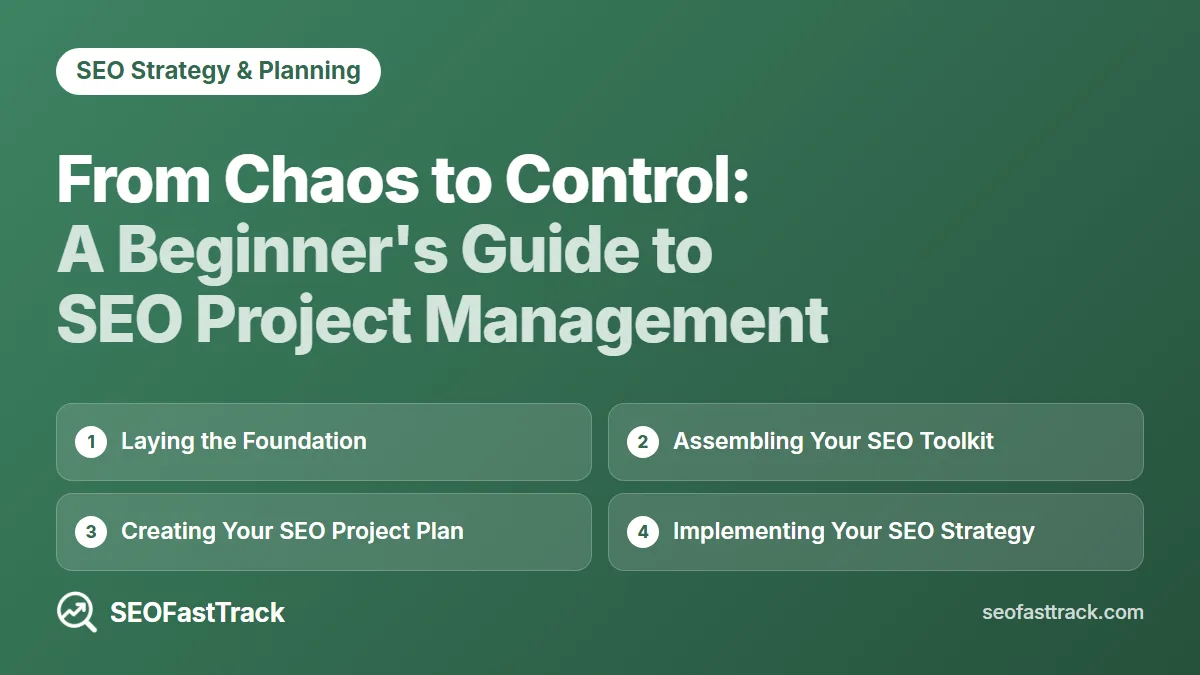
Welcome to SEOFastTrack, your compass in the dynamic world of Search Engine Optimization! Are you ready to transform your SEO efforts from a scattered mess into a streamlined success? In this comprehensive guide, we're diving deep into SEO project management tips, providing actionable strategies tailored for small business owners, bloggers, and digital marketers. Discover how to conquer the chaos, stay organized, and ultimately, achieve top rankings. Intrigued? Let's get started and unlock the secrets to efficient SEO project management!
- Introduction to SEO Project Management
- Laying the Foundation: Planning Your SEO Project
- Assembling Your SEO Toolkit: Essential Resources
- Creating Your SEO Project Plan: A Step-by-Step Guide
- Implementing Your SEO Strategy: Content Marketing
- Implementing Your SEO Strategy: Social Media Marketing
- Implementing Your SEO Strategy: Paid Advertising
- Technical Considerations for Seamless Project Execution
- Monitoring, Analyzing, and Reporting SEO Project Progress
- Common SEO Project Management Challenges and Solutions
- Advanced SEO Project Management Techniques
- Conclusion: Mastering SEO Project Management for Long-Term Success
-
Frequently Asked Questions
- How can I define the scope of my SEO project effectively?
- What are some essential SEO project management tools I should consider using?
- How often should I monitor and report on the progress of my SEO project?
- What's the best way to prioritize SEO tasks within a larger project?
- How can I effectively communicate SEO progress to stakeholders who aren't SEO experts?
- Final Reflection: Mastering the SEO Project Journey
- Unlock Your SEO Superpowers!
Introduction to SEO Project Management
Understanding the Importance of Structured SEO Campaigns
In the realm of Search Engine Optimization (SEO), a structured approach is not just beneficial, it's indispensable. Imagine launching an SEO campaign without a clear roadmap – you're essentially navigating a complex maze blindfolded. Structured SEO campaigns bring order to the inherent chaos of algorithm updates, keyword fluctuations, and competitive pressures. They provide a framework for consistent effort, allowing you to methodically address each facet of SEO, from technical audits to content creation and link building. Without structure, efforts become fragmented, results are unpredictable, and valuable resources are easily wasted.
Consider the example of a small e-commerce business aiming to improve its organic visibility. Without a structured SEO campaign, they might randomly publish blog posts, sporadically update product descriptions, and occasionally dabble in social media promotion. This haphazard approach contrasts sharply with a structured campaign that begins with keyword research, progresses to on-page optimization of product pages, includes a content calendar for targeted blog posts, and incorporates a defined link-building strategy. The structured approach transforms SEO from a guessing game into a series of calculated steps, each contributing to a larger, measurable goal.
Why SEO Project Management is Crucial for Success
SEO project management is the backbone of any successful SEO strategy. It provides the necessary organization, oversight, and accountability to ensure that SEO initiatives are not only implemented but also achieve their intended outcomes. Think of SEO as a complex project with numerous moving parts – keyword research, content creation, technical SEO, link building, performance analysis, and adaptation. Each of these components requires careful planning, execution, and monitoring. SEO project management acts as the conductor of this orchestra, harmonizing all elements to play in tune and achieve a synergistic effect.
Without effective SEO project management, even the most brilliant SEO strategies can fall flat. Imagine a scenario where a company invests heavily in content creation but fails to track keyword rankings or analyze website traffic. They might be producing high-quality content, but without project management, they lack the insights to determine if their efforts are actually driving organic traffic and conversions. SEO project management remedies this by establishing clear processes, setting timelines, defining responsibilities, and implementing robust tracking mechanisms. This ensures that SEO efforts are not just active but also effective and aligned with business objectives.
Key Benefits of Effective SEO Project Management
Effective SEO project management unlocks a multitude of benefits that contribute directly to online success and business growth. One of the most significant advantages is improved efficiency. By meticulously planning and organizing SEO tasks, project management minimizes wasted effort and resources. Tasks are prioritized, deadlines are set, and workflows are streamlined, leading to a more productive and cost-effective SEO operation. This efficiency translates directly into faster turnaround times for SEO initiatives and quicker realization of results.
Furthermore, SEO project management enhances collaboration and communication within teams. When SEO projects are managed effectively, roles and responsibilities are clearly defined, fostering accountability and teamwork. Regular progress updates, transparent reporting, and structured communication channels ensure that everyone is on the same page and working towards common goals.
This collaborative environment not only improves team morale but also reduces errors and misunderstandings, ultimately leading to more cohesive and successful SEO campaigns. Consider a marketing team working on a large SEO project. Project management ensures that the content writers, technical SEO specialists, and outreach team are all synchronized, preventing duplication of effort and maximizing the impact of their combined expertise.
Laying the Foundation: Planning Your SEO Project
Defining Clear Marketing Goals and Objectives
Before embarking on any SEO project, it is paramount to establish crystal-clear marketing goals and objectives. These serve as the compass guiding your SEO efforts and provide a benchmark against which to measure success. Vague goals like "improve SEO" are insufficient. Instead, strive for SMART objectives: Specific, Measurable, Achievable, Relevant, and Time-bound. For example, a SMART SEO objective could be: "Increase organic traffic to our product pages by 20% within the next quarter to boost online sales of our new product line."
Defining clear goals also involves understanding the broader business context. Is the primary goal to increase brand awareness, generate leads, drive sales, or improve customer retention? The answer to this question will heavily influence the specific SEO strategies and tactics employed. For instance, if the goal is lead generation, the SEO focus might be on optimizing landing pages and creating lead magnets, whereas if the goal is brand awareness, content marketing and social media SEO might take precedence. Clearly defined objectives ensure that SEO efforts are strategically aligned with overall business priorities.
Identifying Your Target Audience and Their Needs
Understanding your target audience is fundamental to effective SEO. You are not optimizing for search engines in a vacuum; you are optimizing for people – your potential customers. Identifying your target audience involves creating detailed buyer personas that encapsulate their demographics, psychographics, online behavior, pain points, and needs. This deep understanding of your audience informs every aspect of your SEO strategy, from keyword research to content creation and channel selection.
Consider a business selling artisanal coffee beans online. Their target audience might be coffee enthusiasts aged 25-55, interested in ethically sourced, high-quality coffee, and seeking information about brewing techniques and coffee origins. Understanding this audience allows them to tailor their SEO strategy by targeting keywords like "best ethically sourced coffee beans," "gourmet coffee online," and "how to brew pour-over coffee." Furthermore, it guides their content creation towards blog posts and guides that address their audience's interests and needs, ultimately attracting the right kind of traffic that is more likely to convert into customers.
Market Research and Analysis: Understanding the Competitive Landscape
SEO operates within a competitive ecosystem, and understanding this landscape is crucial for formulating effective strategies. Market research and competitive analysis are essential steps in SEO project planning. This involves identifying your main competitors in the search engine results pages (SERPs) for your target keywords, analyzing their SEO strategies, and identifying opportunities to differentiate yourself and gain a competitive edge.
Tools like SEMrush, Ahrefs, and Moz can be invaluable for competitive analysis. These tools allow you to analyze your competitors' keyword rankings, backlink profiles, content strategies, and website structure. For example, if you are launching a new online fitness coaching business, analyzing your competitors might reveal that they are ranking highly for long-tail keywords related to specific fitness niches like "yoga for beginners" or "HIIT workouts for weight loss." This insight can inform your keyword strategy and content plan, allowing you to target underserved niches or create even more comprehensive and valuable content to outrank your competitors.
Channel Selection: Choosing the Right Platforms
In the multifaceted world of digital marketing, selecting the right channels is paramount for maximizing the impact of your SEO project. While organic search is the core focus of SEO, it's crucial to recognize that SEO works in synergy with other digital marketing channels. Channel selection involves determining which platforms and channels will be most effective in reaching your target audience and achieving your SEO goals. This might include a combination of organic search, social media, email marketing, paid advertising, and content marketing platforms.
For instance, a business targeting a younger demographic might prioritize social media platforms like Instagram and TikTok alongside organic search, recognizing the significant online presence of their target audience on these channels. Conversely, a B2B company targeting professionals might focus on LinkedIn and industry-specific online publications in addition to traditional SEO tactics. The key is to choose channels that align with your audience's online behavior and complement your SEO efforts, creating a holistic digital marketing strategy that amplifies your reach and impact.
Assembling Your SEO Toolkit: Essential Resources
Choosing the Right Project Management Software
Effective SEO project management often hinges on leveraging the right tools, and project management software is a cornerstone of this toolkit. Choosing the appropriate software can significantly streamline workflows, enhance collaboration, and improve overall project efficiency. Numerous project management software options are available, ranging from simple task management tools to comprehensive platforms with advanced features. Factors to consider when selecting software include team size, project complexity, budget, and specific SEO needs.
For smaller teams or simpler SEO projects, tools like Trello or Asana offer user-friendly interfaces and robust task management features. These platforms allow for task creation, assignment, progress tracking, and deadline management, providing a centralized hub for organizing SEO activities. For larger teams or more complex projects, platforms like Jira or Monday.com offer advanced features such as Gantt charts, resource management, and detailed reporting capabilities. The key is to select software that aligns with your team's needs and workflows, facilitating seamless project execution and improved communication.
Leveraging Analytics Tools for Data-Driven Decisions
Data is the lifeblood of successful SEO, and analytics tools are indispensable for extracting meaningful insights and making data-driven decisions. Analytics platforms like Google Analytics and Google Search Console provide a wealth of information about website traffic, keyword performance, user behavior, and technical SEO issues. These tools empower SEO professionals to monitor progress, identify areas for improvement, and refine strategies based on real-world data.
Google Analytics, for example, provides detailed insights into website traffic sources, user engagement metrics (bounce rate, time on page, pages per session), and conversion tracking. This data can be used to understand which SEO efforts are driving the most valuable traffic and conversions. Google Search Console, on the other hand, offers valuable information about website indexing, crawl errors, keyword rankings, and backlinks. By regularly analyzing data from these tools, SEO project managers can identify trends, diagnose problems, and make informed decisions to optimize campaign performance and maximize ROI.
Recommended SEO Tools for Project Execution
Beyond project management and analytics software, a suite of specialized SEO tools is essential for effective project execution. These tools assist in various aspects of SEO, from keyword research and rank tracking to technical SEO audits and content optimization. Having the right SEO tools at your disposal can significantly enhance efficiency, accuracy, and overall campaign effectiveness.
For keyword research, tools like SEMrush, Ahrefs Keyword Explorer, and Moz Keyword Explorer provide comprehensive data on keyword search volume, keyword difficulty, and related keyword ideas. Rank tracking tools, such as AccuRanker or Rank Ranger, allow for monitoring keyword rankings across different search engines and locations. Technical SEO audit tools, like Screaming Frog SEO Spider, help identify website crawl errors, broken links, and other technical issues that can impact SEO performance.
Content optimization tools, such as Surfer SEO or Clearscope, assist in creating SEO-friendly content by analyzing top-ranking content and providing recommendations for keyword usage and content structure. Investing in a selection of these SEO tools equips project managers and their teams with the necessary resources to execute SEO projects effectively and achieve optimal results.
Creating Your SEO Project Plan: A Step-by-Step Guide
Defining Project Scope and Deliverables
Before diving into the specifics of an SEO project, it's crucial to clearly define the project scope and deliverables. The project scope outlines the boundaries of the project, specifying what is included and excluded. Deliverables are the tangible outcomes of the project, the specific results that are expected upon completion. Clearly defining scope and deliverables prevents scope creep, ensures that everyone is aligned on expectations, and provides a framework for measuring project success.
For example, an SEO project scope might be defined as "Improving organic search rankings for 10 core keywords and increasing organic traffic to the website's blog section." The deliverables, in this case, could include: a keyword research report, an on-page optimization plan for the target keywords, a content calendar for blog posts targeting those keywords, and a link-building strategy document. By clearly outlining the scope and deliverables upfront, project managers set clear expectations and establish a roadmap for project execution.
Breaking Down SEO Tasks into Manageable Steps
SEO projects, especially larger ones, can seem overwhelming if approached as a single monolithic task. To effectively manage complexity and maintain momentum, it's essential to break down SEO projects into smaller, manageable steps. This involves identifying all the necessary tasks, sub-tasks, and activities required to achieve the project goals and organizing them in a logical sequence. Breaking down tasks facilitates better planning, resource allocation, and progress tracking.
For instance, the task "Improve on-page SEO" can be further broken down into steps such as: "Conduct keyword research for target pages," "Optimize page titles and meta descriptions," "Optimize header tags (H1-H6)," "Improve internal linking," and "Ensure mobile-friendliness." By breaking down larger tasks into smaller, actionable steps, project managers create a more structured and manageable workflow, making it easier to assign tasks, track progress, and ensure that no critical elements are overlooked.
Setting Realistic Timelines and Deadlines
Realistic timelines and deadlines are crucial for the successful execution of any SEO project. Setting unrealistic deadlines can lead to rushed work, compromised quality, and team burnout. Conversely, overly lenient timelines can result in procrastination and missed opportunities. Effective SEO project management involves setting timelines that are both challenging and achievable, taking into account the complexity of tasks, available resources, and external factors.
When setting timelines, it's essential to consider the dependencies between tasks. Some tasks might be sequential, meaning one task cannot start until another is completed. For example, keyword research must be completed before on-page optimization can begin. Utilizing project management tools with Gantt chart functionality can be helpful in visualizing task dependencies and setting realistic timelines. Regularly reviewing and adjusting timelines as needed is also crucial, especially in the dynamic landscape of SEO where algorithm updates or market changes can impact project schedules.
Assigning Roles and Responsibilities within the Team
Clear roles and responsibilities are fundamental for team accountability and efficient project execution. In SEO project management, it's essential to define who is responsible for each task, sub-task, and deliverable. Clearly assigned roles prevent confusion, eliminate duplication of effort, and ensure that all aspects of the project are adequately covered. Effective role assignment takes into account individual team members' skills, expertise, and workload.
For example, in an SEO project, roles might include: SEO Strategist (responsible for overall strategy and planning), Content Writer (responsible for content creation), Technical SEO Specialist (responsible for website technical optimization), Outreach Specialist (responsible for link building), and Analytics Specialist (responsible for data analysis and reporting). Clearly defining these roles and assigning specific responsibilities to each team member ensures that everyone understands their contribution to the project and fosters a sense of ownership and accountability.
Implementing Your SEO Strategy: Content Marketing
Developing a Content Calendar and Strategy
Content marketing is the engine of many successful SEO strategies, and a well-defined content calendar and strategy are essential for driving organic traffic and engaging your target audience. A content calendar is a schedule that outlines planned content pieces, their topics, publication dates, and target keywords. A content strategy defines the overall approach to content creation, including content types, target audience segments, and content promotion plans.
Developing a content calendar starts with keyword research to identify relevant topics and keywords that your target audience is searching for. Based on keyword research, brainstorm content ideas that address your audience's needs and interests while aligning with your business objectives. Plan a mix of content formats, such as blog posts, articles, infographics, videos, and case studies, to cater to different learning preferences and content consumption habits. A structured content calendar ensures a consistent flow of fresh, valuable content, which is crucial for attracting and retaining organic traffic over time.
Creating Engaging and Valuable Content
The quality of your content is paramount in SEO. Search engines prioritize websites that provide valuable, relevant, and engaging content to their users. Creating content that resonates with your target audience is not just about keyword optimization; it's about providing genuine value, answering their questions, solving their problems, and entertaining them. Engaging content keeps users on your website longer, reduces bounce rates, and increases the likelihood of social sharing and link acquisition, all of which are positive SEO signals.
To create engaging and valuable content, focus on understanding your audience's needs and interests. Conduct thorough research on your chosen topics to ensure accuracy and depth. Use clear, concise language, break up text with headings and subheadings, and incorporate visuals like images and videos to enhance readability and engagement. Encourage user interaction by including calls to action, asking questions, and facilitating comments. High-quality, engaging content not only improves SEO but also builds brand authority and fosters a loyal audience.
Optimizing Content for Different Channels
Content optimization is not a one-size-fits-all approach. Content needs to be optimized for different channels to maximize its reach and impact. While SEO primarily focuses on optimizing content for search engines, consider how your content will perform on other platforms, such as social media, email, and mobile devices. Optimizing content for different channels involves tailoring the format, length, style, and call to action to suit each platform's specific audience and consumption habits.
For example, blog posts intended for SEO should be optimized for relevant keywords, structured with headings and subheadings, and include internal and external links. The same content repurposed for social media might need to be shorter, more visually appealing, and include a compelling headline and image to capture attention in a fast-paced social feed. Email marketing content should be concise, personalized, and include a clear call to action to drive clicks and conversions. Optimizing content for different channels ensures that your message is effectively delivered across all relevant touchpoints, maximizing its overall impact and reach.
Social media marketing, while not a direct ranking factor, plays a crucial role in supporting SEO efforts. Defining clear social media goals and objectives is essential for aligning social media activities with your overall SEO and business strategies. Social media goals might include increasing brand awareness, driving traffic to your website, generating leads, building community, or improving customer engagement. SMART objectives, as with SEO goals, provide a framework for measurable and achievable targets.
For instance, a SMART social media objective could be: "Increase website traffic from social media channels by 15% within the next two months to support lead generation efforts." Defining social media goals helps to focus efforts and measure the effectiveness of social media activities in contributing to broader marketing objectives. It also ensures that social media efforts are strategically aligned with SEO goals, creating a synergistic effect where social media amplifies content reach and brand visibility, indirectly benefiting SEO.
Just as with content marketing for SEO, a social media content calendar is vital for organized and effective social media marketing. A social media content calendar outlines planned social media posts, their content, posting times, and targeted platforms. It ensures a consistent posting schedule, prevents content gaps, and allows for strategic planning of social media campaigns. Building a social media content calendar involves repurposing SEO content, creating platform-specific content, and incorporating a mix of content formats to keep your social media feeds engaging and diverse.
Integrate your SEO content calendar with your social media content calendar to maximize content reuse and amplify reach. For example, a blog post optimized for SEO can be broken down into smaller snippets and repurposed as social media posts across different platforms. Schedule social media posts to promote new blog content, drive traffic to landing pages, and engage with your audience. A well-planned social media content calendar ensures consistent brand presence, drives traffic, and supports overall SEO efforts by expanding content reach and brand visibility.
Engaging with Your Audience and Building Community
Social media's power lies in its ability to facilitate direct interaction and community building. Engaging with your audience on social media is not just about broadcasting messages; it's about creating conversations, building relationships, and fostering a sense of community around your brand. Active engagement on social media platforms can indirectly benefit SEO by increasing brand mentions, social shares, and website traffic from social channels.
Respond to comments, answer questions, participate in relevant conversations, and run social media contests or polls to encourage audience interaction. Building a strong social media community can lead to increased brand loyalty, word-of-mouth marketing, and social signals that, while not direct ranking factors, can contribute to overall brand visibility and online authority, indirectly supporting SEO success. A thriving social media community amplifies your brand's reach and influence, creating a positive feedback loop that benefits both social media marketing and SEO efforts.
Implementing Your SEO Strategy: Paid Advertising
Developing Paid Advertising Campaigns
Paid advertising, particularly Pay-Per-Click (PPC) advertising on search engines like Google Ads, can be a powerful complement to organic SEO efforts. While SEO focuses on long-term organic visibility, paid advertising provides immediate visibility and targeted traffic. Developing paid advertising campaigns in conjunction with SEO strategies can accelerate results, target specific keywords, and reach audiences beyond organic search.
Paid advertising campaigns typically involve keyword research, ad creation, landing page optimization, and budget management. Keyword research for paid advertising often focuses on commercial keywords with high purchase intent, complementing the broader keyword targeting of SEO. Ad creation involves crafting compelling ad copy that attracts clicks and drives conversions. Landing page optimization is crucial to ensure that paid traffic converts effectively. Integrating paid advertising with SEO allows for a balanced approach, leveraging the immediate impact of paid ads with the long-term sustainability of organic search.
Managing Budgets and Bids
Effective budget and bid management are critical for maximizing the ROI of paid advertising campaigns. Paid advertising, particularly PPC, operates on an auction-based system where advertisers bid on keywords. Managing budgets involves setting daily or monthly spending limits, allocating budgets across campaigns and ad groups, and monitoring spend to ensure campaigns stay within budget. Bid management involves optimizing bids for keywords to achieve the desired ad position and cost-per-click (CPC) while maximizing conversions.
Tools like Google Ads provide features for automated bidding strategies, such as Target CPA (Cost Per Acquisition) or Maximize Conversions, which can help optimize bids based on campaign goals. Regularly monitoring campaign performance, analyzing cost data, and adjusting budgets and bids are essential for ensuring efficient ad spend and maximizing the return on investment for paid advertising campaigns. Effective budget and bid management ensures that paid advertising efforts are both effective and cost-efficient, contributing to overall marketing ROI.
Optimizing Campaigns for ROI
The ultimate goal of paid advertising is to generate a positive return on investment (ROI). Optimizing campaigns for ROI involves continuously monitoring campaign performance, analyzing key metrics like conversion rates, cost per conversion, and return on ad spend (ROAS), and making data-driven adjustments to improve campaign efficiency and profitability. A/B testing ad copy, landing pages, and targeting parameters is a crucial part of campaign optimization.
Regularly analyze search query reports to identify new keyword opportunities and negative keywords to refine targeting. Optimize landing pages to improve conversion rates by ensuring they are relevant to ad copy, user-friendly, and include clear calls to action. Track conversions accurately using conversion tracking tools to measure campaign performance and identify areas for improvement. Continuous monitoring, analysis, and optimization are essential for maximizing the ROI of paid advertising campaigns and ensuring that they contribute effectively to overall marketing objectives.
Technical Considerations for Seamless Project Execution
Website Optimization for Conversions
Technical SEO is the foundation upon which successful SEO campaigns are built. However, technical optimization should not only focus on search engine crawlers but also on user experience and conversion optimization. Website optimization for conversions involves ensuring that your website is technically sound, user-friendly, and designed to guide visitors towards desired actions, such as making a purchase, filling out a form, or contacting your business.
Website speed optimization is crucial for both SEO and user experience. Slow loading times can negatively impact rankings and lead to high bounce rates. Mobile-friendliness is also paramount, as a significant portion of web traffic now comes from mobile devices.
Ensure your website is responsive, loads quickly on mobile, and provides a seamless mobile user experience. Website structure and navigation should be intuitive, making it easy for users to find information and navigate to conversion points. Technical SEO efforts should be aligned with conversion optimization to create a website that not only ranks well but also converts traffic into customers.
Ensuring Data Tracking and Reporting
Accurate data tracking and reporting are essential for monitoring SEO project progress, measuring results, and making data-driven decisions. Implementing robust data tracking mechanisms ensures that you are capturing the necessary data to assess campaign performance and identify areas for improvement. Google Analytics and Google Search Console are fundamental tools for tracking website traffic, keyword rankings, user behavior, and technical SEO metrics.
Set up conversion tracking in Google Analytics to measure the effectiveness of your SEO efforts in driving desired actions, such as form submissions, sales, or lead generation. Regularly monitor keyword rankings in Google Search Console to track progress and identify any ranking fluctuations. Create custom dashboards and reports in Google Analytics to visualize key performance indicators (KPIs) and track progress against project goals. Ensure data accuracy by regularly auditing tracking code implementation and data integrity. Reliable data tracking and reporting provide the insights needed to optimize SEO campaigns and demonstrate ROI to stakeholders.
Integrating Marketing Technologies
Modern SEO project management often involves integrating various marketing technologies to streamline workflows, automate tasks, and enhance campaign effectiveness. Marketing technology (MarTech) tools can range from SEO software suites and content management systems (CMS) to marketing automation platforms and customer relationship management (CRM) systems. Integrating these technologies can improve efficiency, collaboration, and data management across SEO projects.
For example, integrating your SEO software with your CRM system can provide a holistic view of customer interactions and attribute conversions to specific SEO efforts. Marketing automation platforms can automate tasks like email marketing, social media posting, and lead nurturing, freeing up SEO professionals to focus on strategic initiatives. Choosing and integrating the right MarTech tools depends on your team's needs, budget, and technical capabilities. Effective technology integration can significantly enhance SEO project execution and improve overall marketing performance.
Monitoring, Analyzing, and Reporting SEO Project Progress
Tracking Key Performance Indicators (KPIs) for SEO Success
Tracking Key Performance Indicators (KPIs) is crucial for measuring the success of SEO projects and demonstrating ROI. KPIs are quantifiable metrics that reflect the progress and performance of SEO efforts in achieving project goals. Selecting the right KPIs is essential for focusing on the metrics that truly matter and providing meaningful insights into SEO campaign effectiveness.
Common KPIs for SEO projects include: organic traffic (website visits from organic search), keyword rankings (position of target keywords in search results), organic conversion rate (percentage of organic traffic that converts), bounce rate (percentage of visitors who leave after viewing only one page), and domain authority (a metric indicating website authority and trustworthiness). The specific KPIs to track will depend on the project goals. For example, if the goal is to increase brand awareness, organic traffic and keyword rankings might be primary KPIs.
If the goal is lead generation, organic conversion rate and lead volume from organic search might be more important. Regularly tracking and analyzing KPIs provides a data-driven understanding of SEO performance and guides optimization efforts.
Utilizing Analytics Platforms for Data Insights
Analytics platforms like Google Analytics and Google Search Console are indispensable for gaining data insights into SEO project performance. These platforms provide a wealth of data on website traffic, user behavior, keyword performance, and technical SEO metrics. Utilizing these platforms effectively involves understanding their features, navigating their interfaces, and extracting meaningful insights from the data.
Google Analytics provides detailed reports on website traffic sources, user demographics, engagement metrics, and conversion tracking. Google Search Console offers insights into website indexing, crawl errors, keyword rankings, and backlink data. Familiarize yourself with the key reports and features of these platforms to monitor KPIs, identify trends, diagnose problems, and uncover opportunities for optimization. Utilize custom dashboards and reports to visualize data and track progress against project goals. Regularly analyzing data from analytics platforms is essential for making data-driven decisions and continuously improving SEO campaign performance.
Creating Regular Reports for Stakeholder Communication
Regular reporting is crucial for communicating SEO project progress, results, and insights to stakeholders, including clients, management, and team members. Reports provide a structured and transparent way to showcase the value of SEO efforts, demonstrate ROI, and keep stakeholders informed. Reports should be clear, concise, and tailored to the audience, focusing on the KPIs and insights that are most relevant to them.
SEO reports typically include metrics such as organic traffic, keyword rankings, conversions from organic search, and key trends or insights. Use visualizations like charts and graphs to present data in an easily digestible format. Provide context and analysis alongside data, explaining the meaning of the metrics and highlighting key achievements and challenges. Regular reporting fosters transparency, builds trust with stakeholders, and ensures that everyone is aligned on project goals and progress. The frequency of reporting can vary depending on project needs and stakeholder preferences, but regular updates are essential for effective communication and project management.
Adapting Your Strategy Based on Performance Data
SEO is an iterative process, and adapting your strategy based on performance data is crucial for long-term success. SEO algorithms, market trends, and competitive landscapes are constantly evolving, requiring ongoing monitoring, analysis, and adaptation. Regularly review performance data from analytics platforms, identify trends, and analyze what's working and what's not. Use data insights to refine your SEO strategy, adjust tactics, and optimize campaigns for improved results.
For example, if keyword ranking data shows that certain keywords are declining, investigate the reasons and adjust your content or link-building strategy accordingly. If analytics data reveals high bounce rates on specific landing pages, analyze user behavior and optimize page content and design to improve engagement. A data-driven approach to SEO involves continuous learning, testing, and adaptation. Embrace a flexible and iterative mindset, and be prepared to adjust your strategy based on performance data to maximize long-term SEO success.
Common SEO Project Management Challenges and Solutions
Managing Budgets and Resources
Managing budgets and resources effectively is a common challenge in SEO project management. SEO projects often involve multiple resources, including tools, software, content creation costs, and team member time. Staying within budget and allocating resources efficiently is crucial for project success and profitability.
To manage budgets effectively, create a detailed project budget upfront, outlining all anticipated costs. Track expenses regularly and compare actual spend against the budget. Prioritize tasks and allocate resources based on their potential impact and ROI. Utilize free or low-cost SEO tools where possible, especially for smaller projects or teams with limited budgets. Optimize workflows and processes to improve efficiency and reduce resource consumption. Effective budget and resource management ensures that SEO projects are delivered within financial constraints and achieve maximum value for investment.
Dealing with Changing Market Conditions
The SEO landscape is constantly evolving, with frequent algorithm updates, changing search trends, and shifting competitive dynamics. Dealing with these changing market conditions is a significant challenge for SEO project managers. Staying up-to-date with the latest SEO news, algorithm updates, and industry best practices is essential for adapting strategies and maintaining SEO performance.
Monitor industry blogs, forums, and social media channels to stay informed about algorithm updates and emerging trends. Be prepared to adjust SEO strategies and tactics in response to algorithm changes or market shifts. Embrace a flexible and adaptable approach to SEO, recognizing that strategies that worked in the past might not be effective in the future. Continuously test new approaches and refine strategies based on performance data and evolving market conditions. Adaptability and continuous learning are key to navigating the dynamic SEO landscape and overcoming challenges posed by changing market conditions.
Staying Up-to-Date with the Latest Trends
SEO is a rapidly evolving field, with new trends, technologies, and best practices emerging constantly. Staying up-to-date with the latest SEO trends is crucial for maintaining a competitive edge and ensuring that SEO strategies remain effective. This requires continuous learning, professional development, and active engagement with the SEO community.
Subscribe to reputable SEO blogs, newsletters, and podcasts to stay informed about industry news and trends. Attend SEO conferences, webinars, and online courses to learn from industry experts and expand your knowledge. Participate in SEO forums and online communities to exchange ideas, share experiences, and stay connected with the SEO community. Dedicate time for ongoing learning and research to stay ahead of the curve and ensure that your SEO skills and knowledge remain current and relevant. Continuous learning and adaptation are essential for thriving in the ever-changing world of SEO.
Advanced SEO Project Management Techniques
Utilizing Agile Methodologies for SEO Projects
Agile methodologies, commonly used in software development, can also be effectively applied to SEO project management. Agile approaches emphasize iterative development, flexibility, collaboration, and continuous improvement. Utilizing agile methodologies in SEO projects can enhance adaptability, improve communication, and deliver faster results.
Agile methodologies like Scrum or Kanban can be adapted for SEO projects by breaking down projects into sprints (short iterations), conducting daily stand-up meetings, and using visual boards to track progress. Agile SEO focuses on delivering value in short cycles, allowing for frequent feedback, adjustments, and course correction. This iterative approach is well-suited to the dynamic nature of SEO, where rapid changes and algorithm updates are common. Agile methodologies can improve team collaboration, enhance project transparency, and accelerate the delivery of SEO results.
Implementing A/B Testing for Continuous Optimization
A/B testing, also known as split testing, is a powerful technique for continuous SEO optimization. A/B testing involves comparing two versions of a webpage, content element, or SEO tactic to determine which version performs better. By systematically testing different variations, SEO professionals can identify what resonates best with users and optimize elements for improved performance.
A/B test elements like page titles, meta descriptions, header tags, content structure, calls to action, and landing page layouts. Use A/B testing tools like Google Optimize or Optimizely to set up and run tests. Analyze test results to identify statistically significant improvements and implement winning variations. A/B testing is an ongoing process of experimentation and optimization, allowing for data-driven decisions and continuous improvement of SEO performance. It's a valuable technique for refining SEO tactics and maximizing ROI over time.
Integrating SEO with Sales and Customer Service
For maximum business impact, SEO should not operate in isolation but be integrated with other business functions, particularly sales and customer service. Integrating SEO with sales ensures that SEO efforts are aligned with sales goals and contribute directly to revenue generation. Integrating SEO with customer service can improve customer experience, build brand loyalty, and generate positive word-of-mouth marketing.
Share SEO insights with sales teams to inform sales strategies and target qualified leads generated through organic search. Collaborate with customer service teams to address customer pain points identified through keyword research and content analysis. Use customer feedback to inform content creation and SEO strategies, ensuring that SEO efforts are aligned with customer needs and expectations. Integrating SEO with sales and customer service creates a holistic approach that maximizes business impact and ensures that SEO contributes to overall business success.
Conclusion: Mastering SEO Project Management for Long-Term Success
Key Takeaways for Effective Project Management
Mastering SEO project management is a journey that requires continuous learning, adaptation, and refinement. Effective SEO project management is not just about implementing tactics; it's about strategic planning, organized execution, data-driven decision-making, and continuous optimization. Key takeaways for effective SEO project management include:
- Structured Planning: Start with clear goals, objectives, and a well-defined project plan.
- Data-Driven Decisions: Utilize analytics data to track progress, identify opportunities, and make informed decisions.
- Adaptability: Be prepared to adjust strategies and tactics in response to algorithm updates and changing market conditions.
- Collaboration: Foster effective communication and collaboration within SEO teams and across departments.
- Continuous Learning: Stay up-to-date with the latest SEO trends and best practices through ongoing learning and professional development.
By embracing these key principles, SEO professionals can move from chaos to control, effectively manage SEO projects, and achieve long-term success in the ever-evolving world of search engine optimization.
Next Steps for Improving Your Skills
The journey to mastering SEO project management is ongoing. To continue improving your skills and expertise, consider the following next steps:
- Deepen your knowledge of SEO: Explore advanced SEO topics such as technical SEO, local SEO, e-commerce SEO, and international SEO.
- Master project management tools: Become proficient in using project management software and SEO tools to streamline workflows and improve efficiency.
- Practice data analysis: Enhance your data analysis skills to extract meaningful insights from analytics platforms and make data-driven decisions.
- Network with SEO professionals: Connect with other SEO project managers and industry experts to share knowledge, learn from best practices, and stay informed about industry trends.
- Seek certifications: Consider pursuing SEO project management certifications to validate your skills and enhance your professional credibility.
By taking these next steps, you can continue to refine your SEO project management skills, stay ahead of the curve, and achieve greater success in your SEO endeavors.
Frequently Asked Questions
How can I define the scope of my SEO project effectively?
Defining the scope involves clearly outlining the project goals, deliverables, and target keywords. This ensures everyone is on the same page and prevents scope creep, leading to a more focused and manageable project.
What are some essential SEO project management tools I should consider using?
Consider tools for keyword research (e.g., Semrush, Ahrefs), project tracking (e.g., Asana, Trello), and performance analysis (e.g., Google Analytics, Google Search Console). These tools help you stay organized and monitor your progress effectively.
How often should I monitor and report on the progress of my SEO project?
Regular monitoring and reporting are crucial, ideally weekly or bi-weekly. This allows you to identify any issues early and make necessary adjustments to stay on track towards your goals.
What's the best way to prioritize SEO tasks within a larger project?
Prioritize tasks based on their potential impact and ease of implementation. Focus on quick wins first to gain momentum and then tackle more complex tasks that have a higher long-term impact.
How can I effectively communicate SEO progress to stakeholders who aren't SEO experts?
Use clear, non-technical language and focus on the business impact of your SEO efforts. Visual aids like charts and graphs can also help to illustrate progress and results in an easily understandable manner.
Final Reflection: Mastering the SEO Project Journey
The journey from SEO chaos to controlled execution is more relevant than ever in today's digital landscape. Effective SEO project management isn't just about ranking higher; it's about building a sustainable online presence that connects with your audience and drives meaningful results. Ignoring the principles outlined in this guide can lead to wasted resources and missed opportunities, highlighting the critical need for structured and strategic SEO initiatives.
The impact of well-managed SEO projects extends far beyond search engine rankings. It shapes brand perception, influences customer behavior, and ultimately, defines success in the online world. The ability to navigate the complexities of SEO, from keyword research to technical audits, is a crucial skill for any modern marketer or business owner. Success is not final, failure is not fatal: It is the courage to continue that counts.
- Winston Churchill. This quote resonates deeply with the iterative nature of SEO, where constant learning and adaptation are essential for long-term success.
Now, as you embark on your own SEO project management journey, I encourage you to reflect on the principles we've explored. Consider how you can implement these strategies to not only improve your search engine rankings but also to create a more meaningful and impactful online experience for your audience. Embrace the challenge, learn from your experiences, and remember that every step you take towards a more organized and strategic approach is a step closer to achieving your SEO goals.
Unlock Your SEO Superpowers!
Thanks for exploring the world of SEO project management with us! We hope this guide has equipped you with the knowledge and tools to streamline your SEO campaigns and achieve significant results. Now, let's put that knowledge into action!
Here are a few things you can do right now to take control:
- Immediately implement a task management system, even a simple spreadsheet, to track your current SEO projects and deadlines. Prioritize quick wins first!
- Share this article with a colleague or friend who is also working to improve their SEO project management. Collaboration is key!
- Experiment with a time-blocking technique, such as the Pomodoro Method, to focus intently on specific SEO tasks and minimize distractions. You'll be amazed at how much you can accomplish!
What's the first SEO project task you're committing to tackling today based on what you learned? Share it in the comments below – let's hold each other accountable!