On-Page SEO for Product Pages
Read more about this topic
Unlock higher rankings and more sales by mastering on-page SEO for product pages. This focused guide reveals how to optimize every element—from title tags and meta descriptions to image alt text and schema markup—so your products stand out in search results. Learn to craft compelling, keyword-rich content that not only attracts the right buyers but also improves click-through rates and conversions. Ideal for small business owners, bloggers, and digital marketers, these actionable tactics turn product listings into powerful traffic magnets. Start boosting your visibility and outshine competitors today! 🚀
2 articles

Articles in On-Page SEO for Product Pages
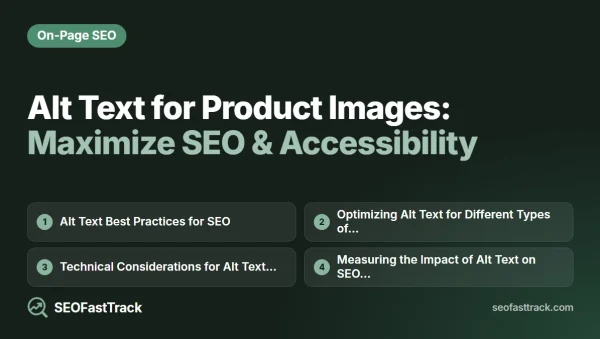
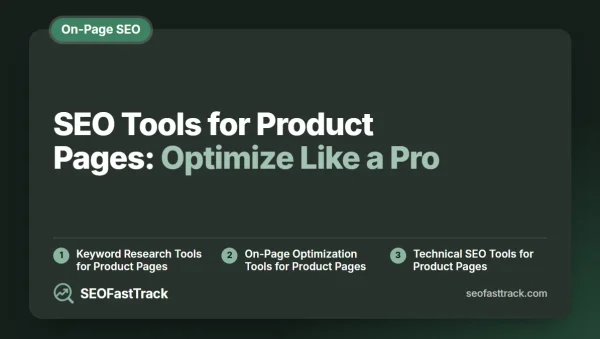
SEO Tools for Product Pages: Optimize Like a Pro
Unlock Higher Rankings with On-Page SEO for Product Pages
Product pages are the digital storefronts of your e-commerce business—they decide whether a visitor clicks “Add to Cart” or bounces to a competitor. This subcategory dives deep into optimizing every element of a product page, from title tags and meta descriptions to image compression and schema markup, ensuring your products not only rank higher in search results but also convert traffic into sales. Whether you sell gadgets, clothing, or digital downloads, mastering these tactics is non-negotiable for outperforming rival stores.
🔍 Crafting Irresistible Title Tags & Meta Descriptions
Your title tag is the first impression in Google’s search results—it must combine your primary keyword (e.g., “wireless noise-cancelling headphones”) with a compelling value proposition or urgency trigger. Keep it under 60 characters to avoid truncation, and place the keyword near the front for relevance boosts. Pair this with a meta description of 150-160 characters that includes a call-to-action like “Free Shipping” or “30-Day Returns”—this directly improves click-through rates (CTR), a strong ranking signal.
Beyond the basics, use dynamic variables for price, stock status, or ratings in titles where possible, as these increase relevance for long-tail queries. Always perform A/B testing on different phrasing to see which drives higher engagement. Remember, your title and meta description are ad copy, not just labels—make them scintillating to earn that precious click over more prominent competitors.
🖼️ Optimizing Product Images: Alt Text, Compression, & Lazy Loading
High-resolution images are essential for conversions but they can cripple page speed if not optimized. Compress every image to WebP or JPEG 2000 format without sacrificing quality, and use responsive srcset attributes to serve appropriately sized files across devices. Crucially, fill the alt attribute with a descriptive, keyword-rich phrase that explains the product (e.g., “blue ergonomic office chair with lumbar support”), helping search engines understand your page’s content while improving accessibility for visually impaired users.
Implement lazy loading so that images below the fold only load when the user scrolls to them—this slashes initial page load time, a critical Google ranking factor. Also, embed a few product images in a gallery with unique filenames (avoid “IMG_123.jpg”) and add structured data like Product schema to enable rich snippets with price, availability, and review stars. These enhancements make your listing visually dominant in SERPs, driving both organic and paid traffic efficiency.
📦 Structuring Product Data with Schema Markup (JSON-LD)
Schema markup is your secret weapon for standing out in search results. By adding JSON-LD structured data for Product, Offer, and AggregateRating, you can enable rich snippets that display price, stock availability, and star ratings directly under your link. This not only boosts CTR but also signals to Google that your page is authoritative and user-friendly, improving your chances of earning a position in the “rich results” carousel—a prime spot for e-commerce queries.
Take this further by including BreadcrumbList schema to improve internal navigation links in SERPs, and Review schema to highlight top customer feedback. Ensure your JSON-LD is valid using Google’s Rich Results Test tool, and update it dynamically when inventory changes. Proper implementation can increase organic visibility by up to 30% for transactional queries, making it a high-ROI task for any product-heavy site.
📝 Writing Unique, Persuasive Product Descriptions
Never copy manufacturer descriptions—duplicate content is a ranking killer. Instead, write 300-500 words that blend emotional triggers (e.g., “transform your mornings”) with factual details (dimensions, materials, compatibility). Use bullet points for spec sheets but intersperse them with paragraphs that address pain points and solutions. Incorporate your target keywords naturally, including long-tail variations like “best budget drone for beginners” to capture voice-search traffic.
Also, structure descriptions with H2 and H3 subheadings (e.g., “What’s in the Box?”, “Customer Reviews”) to improve readability and on-page hierarchy. Add a unique “Why Choose This” section that highlights your brand’s unique selling proposition, and update descriptions seasonally or when product features change. High-quality, fresh content signals relevance to crawlers and helps you earn featured snippets for specific user queries.
⚡ Technical Tweaks: Page Speed, URL Structure, & Internal Linking
Page load time is a direct ranking factor—aim for under 3 seconds by minimizing JavaScript, enabling browser caching, and using a content delivery network (CDN). Choose clean, short URLs like /wireless-headphones/ over parameters like ?id=1234, and include your primary keyword in the slug. This helps both users and crawlers understand your page instantly. Also, ensure your page is mobile-responsive, as over 60% of product searches occur on mobile devices.
Internal linking is equally vital: link from high-authority blog posts or category pages to your key product pages using descriptive anchor text (e.g., “shop our ergonomic chairs”). Within the product page, add links to related products, bundle deals, or sizing guides—this spreads link equity and increases average session duration. Use canonical tags to prevent duplicate content issues from filterable product variants, and submit your XML sitemap to Google Search Console for faster indexing.
🏷️ Leveraging User-Generated Content (Reviews & Q&A)
Customer reviews are gold for on-page SEO—they add fresh, long-tail keyword-rich content without extra effort. Encourage reviews by sending follow-up emails post-purchase and display them prominently with schema markup for star ratings. Not only do reviews increase trust, but they also naturally incorporate terms like “comfortable” or “easy to assemble” that real shoppers use, helping your page match more queries. Implement a Q&A section where customers can ask product-specific questions, and answer them promptly—this engages users and builds a rich corpus of relevant text.
To maximize impact, moderate reviews for quality but avoid deleting negative ones; a mix of ratings appears more authentic and improves CTR. Feature “Top Reviews” in a carousel on the product page, and consider adding a “Related Products from this Brand” section. User-generated content also signals freshness to search engines, encouraging more frequent re-crawling and potentially faster ranking improvements for new product lines.
Frequently Asked Questions
What is the most important on-page SEO element for product pages?
The title tag is often considered the most critical because it directly influences both relevance and click-through rate. However, a close second is schema markup, as it enables rich results that dramatically boost visibility. Focus first on unique titles and descriptions, then layer on structured data for maximal impact.
How long should a product description be for SEO?
While there’s no strict rule, 300-500 words generally works well—it provides enough space for naturally including keywords and addressing user questions without overwhelming visitors. Shorter descriptions for simple products are fine, but ensure every word adds value. Test longer copy for complex items with many features.
Can I use manufacturer product descriptions if I rewrite them slightly?
Rewriting is acceptable, but heavily modifying a manufacturer’s copy is risky as it may still trigger duplicate content filters. Write completely original descriptions from scratch, focusing on your brand’s voice and customer pain points. If you must use a few standard details, rephrase them entirely to avoid penalty risks.
Do image alt texts really affect product page rankings?
Yes, alt text helps search engines understand images, which can improve relevance for image searches and organic queries. However, avoid keyword stuffing—use natural, descriptive phrases that also benefit accessibility. Alt text alone won’t skyrocket rankings, but it complements your overall on-page strategy.
How often should I update product page content?
Update pages whenever product features, prices, or stock change, and refresh descriptions seasonally or when you have new customer insights. Adding new reviews regularly also keeps content fresh. Avoid wholesale changes too frequently—Google values stable, high-quality pages—but periodic enhancements can boost re-crawling and rankings.
Related topics