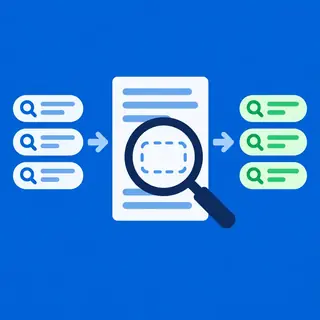
Understanding Keyword Intent
Read more about this topic
Unlock the true power of your SEO strategy by mastering keyword intent—the secret sauce that separates rankings from revenue. Instead of chasing high-volume terms that attract the wrong visitors, learn to decode what your audience actually wants at every stage of their journey. Whether they’re hunting for quick answers, comparing options, or ready to buy, aligning your content with search intent boosts engagement, conversions, and authority. This guide breaks down the four core intent types—informational, navigational, commercial, and transactional—and shows you how to weave them into your keyword research for laser-focused traffic that converts. Stop guessing, start targeting, and turn clicks into customers with intent-driven SEO.
1 article

Articles in Understanding Keyword Intent
Understanding Keyword Intent: The Key to Unlocking Higher Rankings
Welcome to the "Understanding Keyword Intent" subcategory of our Keyword Research hub at SEOFastTrack. Here, we decode the psychology behind every search query, helping you move beyond simple volume metrics and into the realm of true user satisfaction. By mastering keyword intent, you’ll attract not just more traffic, but the right traffic—visitors ready to buy, learn, or engage. This foundational skill transforms your entire SEO strategy, aligning your content with what your audience genuinely seeks.
🔍 The Four Core Types of Search Intent
Search intent is traditionally divided into four pillars: informational (seeking knowledge), navigational (finding a specific site), commercial investigation (researching before a purchase), and transactional (ready to buy). Understanding these categories is your first step. For example, "best running shoes" is commercial, while "how to tie shoelaces" is informational. By classifying your target keywords, you can tailor your content format—blog posts for informational, product comparisons for commercial, and landing pages for transactional.
Misjudging intent is a costly mistake. If you publish a sales page for an informational query, your bounce rate skyrockets, and Google notices. Conversely, a top-of-funnel blog post targeting a transactional query will fail to convert. This section provides practical frameworks and real-world examples to help you label every keyword correctly, ensuring your content matches the searcher’s mental state at that exact moment.
🧠 How to Analyze SERP Features for Intent Clues
The search engine results page (SERP) itself is your best crystal ball. When you type a keyword, analyze what appears: if you see featured snippets, "People Also Ask" boxes, or video carousels, that signals informational intent. If you see shopping ads, product grids, or review stars, that indicates commercial or transactional intent. This reverse-engineering technique is invaluable because Google has already optimized its results to match user expectations.
For instance, searching "buy organic coffee beans" will likely show a Google Shopping carousel and merchant listings. Meanwhile, "coffee brewing guide" will show long-form articles and YouTube videos. By consistently recording these SERP features for your key phrases, you can pre-determine the content type, length, and format needed to rank. This section offers a step-by-step checklist for conducting a "SERP audit" on any keyword before you write a single word.
📊 Mapping Intent to the Marketing Funnel
Every stage of your customer’s journey corresponds to a specific intent type. The top of the funnel (TOFU) is dominated by informational queries—people identifying a problem. The middle (MOFU) features commercial investigation—comparing options. The bottom (BOFU) is transactional—ready to purchase. Mapping your keywords across this funnel allows you to create a cohesive content strategy that nurtures leads naturally, rather than forcing a hard sell at the wrong time.
For small businesses, this mapping is crucial because you have limited resources. You don’t need to rank for every keyword; instead, you need to rank for the right ones at each stage. This subcategory provides ready-to-use templates and downloadable sheets to plot your keyword list against the funnel. You’ll learn how to prioritize BOFU keywords for immediate revenue, while using TOFU content to build authority and capture new audiences over time.
🛠️ Tools and Techniques for Intent Validation
While manual SERP analysis is powerful, automated tools accelerate the process. Platforms like Ahrefs, Semrush, and Google’s own Search Console offer filters and dashboards that highlight keyword difficulty, click-through rates, and even estimated conversions. More importantly, you can use Google Search Console's performance report to see which queries already drive impressions and clicks, revealing the intent of your current audience based on your existing content’s performance.
Another powerful technique is analyzing the "sitelinks" and "breadcrumb" patterns in the SERP. A result with deep internal links suggests a comprehensive pillar page, common for informational intent. This section reviews the top free and paid tools, explains their specific intent-related features, and shows you how to use "keyword clustering" to group similar queries. You’ll finish with a clear, repeatable workflow to validate intent for every keyword in your pipeline.
✍️ Crafting Content That Matches Intent Perfectly
Once you’ve identified intent, the next step is execution. Informational content thrives with headings, bullet points, and clear step-by-step instructions. Commercial content benefits from comparison tables, pros-and-cons lists, and case studies. Transactional content demands urgency, clear CTAs, social proof, and frictionless checkout instructions. This aligning of format to intent is known as content-to-intent matching, and it’s the secret behind high dwell time and low bounce rates.
Furthermore, matching intent extends to your meta title and description. Use action words like "buy," "best," or "how to" to mirror the searcher’s mindset directly in the search result. This increases your organic CTR, a key ranking factor. This subcategory includes before-and-after examples of content rewritten to better match intent, demonstrating significant improvements in engagement metrics. You will walk away with a concise content brief template tailored for each intent type.
📈 Measuring Success and Refining Over Time
Intent is not static; it evolves with seasons, trends, and algorithm updates. Therefore, your keyword intent strategy must be continuously monitored. Track metrics like time on page, conversion rate, and secondary actions (e.g., email signups or downloads) for each piece of content. If a page targeting transactional intent has a low conversion rate, your offer or messaging might be misaligned—or the intent label was wrong from the start.
Use A/B testing on headlines and CTAs to see which phrasing resonates better with the actual visitors you attract. Additionally, seasonal shifts often change the domain of intent—for example, "Christmas gifts" shifts from informational in October to transactional in December. This section provides a monthly audit checklist to help you review your keyword performance data, reclassify any changed intents, and update your content accordingly. Data-driven tweaks will keep your SEO strategy agile and effective.
Frequently Asked Questions
What is the difference between commercial and transactional intent?
Commercial intent involves researching a product or service before buying, such as comparing brands or reading reviews. Transactional intent is the final step where the user is ready to purchase and looks for specific product pages, checkout options, or local availability. Understanding this difference helps you decide whether to create comparison guides or optimized landing pages.
How do I know the keyword intent without any tools?
Simply type the keyword into a private browser window and observe the SERP. If you see blog posts and videos, it’s informational. If you see product listings, ads, or price comparisons, it’s commercial or transactional. Also, examine the "People Also Ask" section for additional clues about related search needs.
Can a single keyword have multiple intents?
Yes, many keywords are ambiguous. For example, "apple" could be informational (fruit nutrition), navigational (Apple Inc.), or commercial (iPhone reviews). However, Google now personalizes results based on user history and location. To address this, create separate content pages for each intent variant, using long-tail modifiers like "how to" or "buy" to disambiguate.
How does matching keyword intent affect my SEO rankings?
Matching intent improves user experience signals like dwell time, low bounce rate, and high click-through rate. Google interprets these signals as a sign that your content satisfies the query. Over time, this leads to higher rankings for your target keywords and improved organic visibility, as you’re essentially telling Google you have the most relevant answer.
Should I target keywords with low search volume if they have high buying intent?
Absolutely. Long-tail transactional keywords often have lower volume but much higher conversion rates and lower competition. For a small business, ranking for a specific phrase like "buy stainless steel water bottle with straw" can be far more profitable than targeting the broad "water bottle." Focus your resources on these niche, high-intent terms.
Related topics