
Content Gap Analysis for Keyword Opportunities
Read more about this topic
Uncover hidden ranking potential with content gap analysis—the smartest way to find keyword opportunities your competitors already dominate. Instead of guessing what to write, you’ll systematically discover queries your site misses, prioritize them by search volume and intent, and craft content that fills the void. Perfect for small business owners, bloggers, and digital marketers, this approach turns rival strengths into your roadmap for organic growth. No fluff—just actionable insights that boost visibility, attract qualified traffic, and outrank the competition. Start closing the gap today! 🚀
2 articles

Articles in Content Gap Analysis for Keyword Opportunities
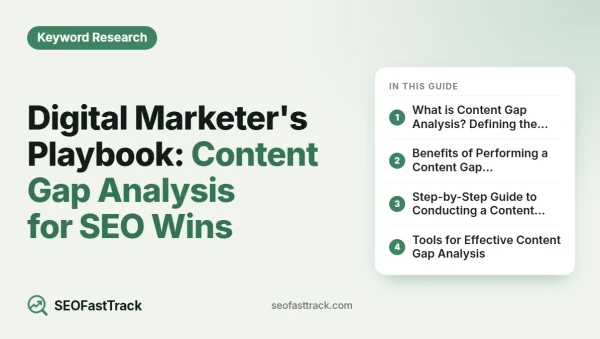
Digital Marketer's Playbook: Content Gap Analysis for SEO Wins
Unlock Hidden Growth with Content Gap Analysis for Keyword Opportunities
Content gap analysis is the strategic process of identifying keyword opportunities your competitors rank for but your website does not. On SEOFastTrack, this subcategory dives deep into turning these missed chances into actionable content plans. By systematically comparing your current content inventory against competitor and industry benchmarks, you’ll uncover high-intent queries, untapped topics, and underserved audiences—all without guessing. This page is your blueprint for converting raw search data into a sustainable editorial calendar that boosts organic traffic, authority, and conversions.
🔍 How to Perform a Step-by-Step Content Gap Audit
Begin by exporting your top 20 competitor domains from tools like Ahrefs, Semrush, or Moz. Filter their ranking pages for keywords where you have zero presence, then segment those terms by search intent (informational, transactional, navigational). Next, cross-reference your existing posts with a content inventory spreadsheet to spot thematic holes—e.g., you cover “on-page SEO” but not “schema markup for beginners.” Prioritize gaps by search volume, difficulty, and business relevance.
Finally, validate each opportunity by checking search engine results pages (SERPs) for content quality. If the top results are thin or outdated, you have a quick win. Create a matrix of “gap keywords” mapped to your buyer’s journey stages, then assign each to a content format (blog post, video, downloadable template). This audit ensures your next 30 days of publishing are data-backed, not intuition-driven.
🎯 Prioritizing High-Impact Keywords Over Vanity Metrics
Not all missing keywords are worth chasing. Focus on terms with commercial or purchase intent (e.g., “best SEO tool for local businesses”) rather than broad informational queries like “what is SEO.” Use KPIs like click-through rate (CTR) potential, keyword difficulty under 40, and a clear connection to your product or service. Pair these with long-tail variations where competition is lower but conversion rates are higher.
Also, analyze your competitor’s content depth—if they have a 3,000-word ultimate guide and your draft is 1,500 words, either expand or pivot to a more specific angle. Leverage “People Also Ask” boxes and related searches to uncover micro-gaps. Create a scoring rubric (e.g., 1-10 for relevance, traffic potential, and effort) so your team can quickly arbitrate between dozens of ideas and focus only on those that move the needle.
📊 Tools and Templates to Automate Gap Detection
Popular tools like Ubersuggest, Keyword Gap (by Semrush), and Content Gap (by Ahrefs) provide side-by-side comparisons of up to five domains. You can filter by country, language, and position (e.g., top 10 vs. top 50) to find terms where competitors rank on page one but you’re nowhere. For budget-friendly options, use Google Search Console to export your current queries and overlay that with a free keyword rank tracker.
Build a reusable gap analysis spreadsheet with columns for keyword, volume, difficulty, current ranking (yours), competitor URLs, and content idea. Automate weekly alerts using tools like Google Alerts to monitor new competitor posts or ranking shifts. Additionally, integrate your CMS (WordPress) with data feeds from Rank Math or Yoast to flag pages that have dropped out of the top 20—those are instant gap indicators. Proper tooling reduces manual work by 70%, letting you scale your research across dozens of niches.
💡 Turning Gaps into a Content Strategy That Converts
Once you’ve identified 50 high-priority gaps, cluster them by topic pillar. For each pillar, create a central “cornerstone” page (comprehensive guide) and link out to 5-7 supporting posts that target specific long-tail queries. Use internal linking to pass authority from high-performing pages to new content, accelerating rankings. For example, if your gap is “local SEO checklist,” build a downloadable PDF and embed it in a blog post, then link to service pages.
Repurpose existing content to close gaps faster—update an old post with new statistics, add a FAQ section, or create a video transcription. This not only saves time but also signals freshness to Google. Track your progress monthly: monitor keyword positions, organic impressions, and conversion rates from those new pages. Iterate by publishing A/B versions of headlines or meta descriptions for top opportunities. Remember, content gap analysis is not a one-time task but an ongoing cyclical process aligned with algorithm updates and competitor moves.
📈 Measuring ROI and Refining Your Gap Approach
Define a KPIs dashboard that ties each new piece of content to revenue—use UTM links for ecommerce or contact form submissions for service businesses. Compare your organic traffic growth against a 3-month baseline, then attribute gains to specific gap keywords. Calculate your “gap-to-conversion lift” by dividing new leads from gapped keywords by total leads generated by content. If your ROI is negative, you may be targeting too competitive terms—rebalance toward lower difficulty gems.
Regularly review your competitor set—they change, and so do market trends. Use seasonal trends (e.g., “back to school SEO” or “holiday shopping keywords”) to anticipate future gaps. Also, monitor the percentage of your content that ranks on page 2—those are near-misses that can be optimized with better internal links or richer media. Ultimately, a mature gap analysis practice reduces wasted effort, improves topical authority, and ensures every published piece has a strategic purpose, not just a title.
Frequently Asked Questions
What is the difference between content gap analysis and keyword research?
Keyword research discovers new terms broadly, often focusing on volume and intent. Content gap analysis is more targeted—it compares your existing rankings against competitors to find where you are missing content altogether. Think of keyword research as casting a wide net, while gap analysis is the surgical retrival of missed opportunities that already have proven demand for your niche.
How often should I perform a content gap analysis?
For most small businesses and bloggers, a comprehensive audit every quarter works well. However, if you operate in a fast-moving industry (like tech or fashion), do a light refresh monthly using automated tools. Also run a gap analysis after major algorithm updates or when launching a new product, as competitor landscapes shift quickly.
Can I do content gap analysis without paid tools?
Yes. Use Google Search Console to see which queries you rank for and are near page one. Then manually search competitor sites for their key pages and note their target keywords via page titles and headings. You can also use Google’s “site:competitor.com” operator with your niche terms. Free browser extensions like Keywords Everywhere provide volume estimates without full subscriptions.
How do I avoid creating duplicate content when filling gaps?
Focus on unique angles, data, or formats. If a competitor ranks for “SEO checklist,” your version could be “SEO checklist for wedding photographers” with real case examples. Add exclusive screenshots, video tutorials, or downloadable templates. Use canonical tags if you repurpose existing pages, but prioritize original research and expert quotes to stand out in SERPs.
What metrics indicate that my gap content is successful?
Monitor keyword rankings for your targeted phrases within 30-60 days, along with organic clicks and time-on-page. Ideally, you want to see at least three keywords move into the top 10. Also track engagement signals like comments, shares, or linkable mentions. The ultimate metric is conversion—whether that means newsletter signups, product purchases, or service inquiries from that specific page.
Related topics