
E-commerce Keyword Research
Read more about this topic
Discover the power of e-commerce keyword research to unlock your online store’s true potential! 🛒🔍 In the competitive world of online selling, simply guessing what customers type into search engines isn’t enough—you need a data-driven strategy that targets high-intent shoppers ready to buy. This guide breaks down how to find commercial keywords that drive conversions, identify long-tail phrases with lower competition, and leverage tools like Google Keyword Planner, SEMrush, or Ahrefs to uncover product-specific search trends. You’ll learn to analyze search intent (from “best running shoes” to “buy Nike Air Zoom”), spot seasonal spikes, and optimize product titles, descriptions, and category pages for maximum visibility. Whether you’re on Shopify, WooCommerce, or Amazon, e-commerce SEO demands a unique blend of buyer psychology and technical precision. Skip the guesswork, boost your click-through rates, and turn searches into sales with actionable tactics tailored for small businesses and digital marketers. Start refining your keyword list today to stay ahead of competitors and grow your revenue organically! 🚀
1 article

Articles in E-commerce Keyword Research
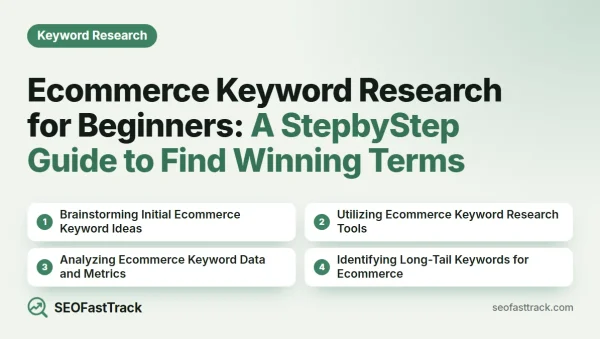
Mastering E-commerce Keyword Research: Your Path to Higher Rankings and Sales
E-commerce keyword research is the strategic process of discovering the exact search terms your potential customers use to find products online—then leveraging those terms to outrank competitors and drive qualified traffic to your product pages. Unlike standard SEO, this subcategory focuses on transactional intent, product-specific long-tail keywords, and category-level optimization. At SEOFastTrack, we break down how to turn search queries into revenue, helping small business owners and digital marketers build a sustainable organic pipeline.
🔍 Understanding Transactional vs. Informational Intent in E-commerce
E-commerce keyword research hinges on distinguishing between users who are ready to buy versus those merely browsing. Transactional keywords—like “buy wireless noise-cancelling headphones” or “discount running shoes size 9”—indicate high purchase intent and should anchor your product pages. Informational queries, such as “how to choose running shoes,” are better suited for blog content that nurtures prospects. By mapping intent to your site structure, you avoid wasting SEO budget on keywords that never convert.
Focus on “buy,” “order,” “price,” “cheap,” and “under $50” modifiers to capture bottom-funnel shoppers. Use tools like Google Keyword Planner or Ahrefs to filter by commercial intent, then prioritize keywords with moderate competition but strong conversion potential. Remember, a keyword that brings 1,000 weekly searches but converts at 0.5% is less valuable than one with 200 searches that converts at 5%. This intent-first approach ensures your product pages rank for queries that actually lead to sales.
🛒 Long-Tail Keyword Strategies for Product and Category Pages
Long-tail keywords—phrases with three or more words—are gold for e-commerce because they face less competition and attract highly specific buyer intent. For example, “organic cotton baby onesie size 3-6 months” outperforms generic “baby onesie” in conversion rates. Build a long-tail matrix by combining your product’s core attributes (material, size, color, use case) with buyer qualifiers (best, affordable, eco-friendly). This tactic helps small stores rank against giants like Amazon or Walmart.
Use Google’s autocomplete, “People Also Ask,” and Amazon’s search suggestions to uncover niche phrases customers genuinely type. Then, map each long-tail keyword to a specific product URL, ensuring your title tags, meta descriptions, and body copy mirror the query verbatim. For category pages, target broader long-tails like “women’s waterproof hiking boots” while using product pages for ultra-specific terms. This structured approach improves click-through rates and reduces bounce, signaling relevance to search engines.
📊 Competitor Analysis: Stealing the Keywords That Actually Work
Your competitors have already done part of the keyword research for you—so why start from scratch? Analyze top-ranking e-commerce sites in your niche using tools like SEMrush or SpyFu to reveal which keywords drive their organic traffic. Pay special attention to their product pages that rank for transactional terms, and note the specific modifiers, brand names, and category structures they use. This reverse-engineering strategy saves time and uncovers gaps they may have missed.
But don’t just copy—differentiate. Look for “keyword gaps” where competitors rank poorly or not at all, such as product variations, local terms, or new trends. For instance, if they miss “vegan leather handbag,” you can own that space. Also, analyze their anchor text and internal linking to see how they distribute keyword equity across pages. By identifying weak spots, you can craft content that targets underserved queries, giving you a competitive edge without battling for already-saturated terms.
🌐 Seasonal and Trend-Based Keywords for Peak Sales Periods
E-commerce sales fluctuate with seasons, holidays, and trends; your keyword strategy must adapt accordingly. Start by reviewing historical search data for your niche—for example, “halloween costumes for dogs” peaks in September and October, while “swimwear” spikes in April. Use Google Trends and keyword planners to forecast upcoming surges, then plan content and product page updates 6–8 weeks in advance. This lead time lets you build authority before the rush, ensuring you rank when demand hits.
Also monitor trending topics on social media and industry forums to catch emerging keywords early. For instance, if a viral TikTok popularizes “aesthetic desk setup,” you can quickly create product pages targeting that phrase before competitors catch on. Balance evergreen keywords (e.g., “yoga mat”) with seasonal ones (e.g., “gift for yoga lover”) to maintain consistent traffic. Create a keyword calendar that aligns with your inventory and promotional schedules, and update it quarterly to stay responsive.
⚙️ Tools and Workflows to Streamline E-commerce Keyword Research
Effective e-commerce keyword research requires a systematic toolset, not just manual guesswork. Combine free tools like Google Search Console (to see which queries already bring impressions) with paid platforms like Ahrefs (for search volume, difficulty, and competitor data) and MerchantWords (for Amazon-specific queries). Use spreadsheet software to maintain a living keyword database with columns for intent, volume, difficulty, and target page. This organized approach ensures no keyword falls through the cracks.
Automate where possible: set up alerts for new keyword opportunities in your niche and schedule weekly exports of your top-performing queries from Search Console. For larger catalogs, leverage keyword clustering tools that group similar terms into topics, allowing you to create umbrella pages that target multiple related phrases without cannibalization. Test your keyword choices by tracking rankings and conversion rates monthly, then refine based on real performance data. A streamlined workflow turns keyword research from a one-time task into a continuous growth engine.
Frequently Asked Questions
How is e-commerce keyword research different from regular SEO keyword research?
E-commerce focuses on transactional intent—keywords that signal readiness to buy—as opposed to informational intent. It also requires mapping keywords to specific product and category pages, managing facets like size or color, and handling high-volume, high-competition terms against giants like Amazon. Regular SEO often centers on blog content and broader informational queries.
Should I target high-volume keywords or long-tail keywords first?
Start with long-tail keywords because they have lower competition, higher conversion rates, and are easier for small stores to rank for. Once you establish authority, gradually target higher-volume terms that align with your product’s core value. Prioritize keywords with at least decent search volume (e.g., 100+ monthly) but difficulty under 30.
How often should I update my e-commerce keyword list?
Update it monthly for seasonal products and quarterly for evergreen items. Monitor search trends, competitor rankings, and your own analytics to spot shifts. At minimum, review your keyword list after major sales events or product launches, and refresh content targeting underperforming terms.
Can I use the same keywords for product pages and blog posts?
No—this creates keyword cannibalization, where pages compete against each other. Use product pages for transactional terms and blog posts for informational keywords. For example, “best running shoes” belongs on a guide, while “buy Adidas Ultraboost” goes on a product page. Ensure internal links connect both.
What is the best free tool for e-commerce keyword research?
Google Search Console is the most valuable free tool because it shows real queries that already bring impressions to your site. Pair it with Google Keyword Planner for search volume and Google Trends for seasonality. For deeper competitor insights, consider a free trial of Ahrefs or SEMrush.
Related topics