Backlink Analysis Tools and Techniques
Read more about this topic
Unlock the hidden power of your link profile with specialized backlink analysis tools and proven techniques. Whether you’re a small business owner or a seasoned digital marketer, understanding who links to you—and how—is the cornerstone of off-page SEO. Our deep-dive guides reveal how to audit competitor backlinks, spot toxic links, uncover unlinked brand mentions, and track your domain authority growth over time. From using Ahrefs, Semrush, and Majestic to mastering advanced strategies like link reclamation and gap analysis, you’ll learn to turn raw data into actionable link-building campaigns. Stop guessing and start measuring—because every high-quality backlink can boost your rankings, referral traffic, and credibility. Explore the best free and paid tools, essential metrics (like DA, PA, and trust flow), and step-by-step workflows to stay ahead of Google’s algorithm. Your next #1 ranking is just a link audit away. 🚀🔗
3 articles
Articles in Backlink Analysis Tools and Techniques
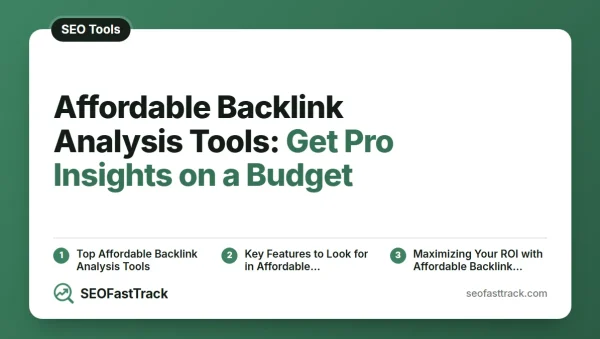
Affordable Backlink Analysis Tools: Get Pro Insights on a Budget
Moz Link Explorer: Your Secret Weapon for Competitive Backlink Research
Master Backlink Analysis Tools and Techniques for Stronger SEO
Welcome to our dedicated section on backlink analysis tools and techniques, a cornerstone of any successful SEO strategy. Here at SEOFastTrack, we break down the complex world of link profiles into actionable insights. Whether you’re a small business owner, blogger, or digital marketer, understanding who links to you and how can dramatically improve your search rankings, uncover competitor weaknesses, and drive organic traffic. Explore this subcategory to learn how to harness powerful tools and practical methods to audit, monitor, and build high-quality backlinks that boost your domain authority and online visibility.
🔍 Top Backlink Analysis Tools You Should Know
In this section, we dive into the most trusted backlink analysis tools on the market, from premium platforms like Ahrefs, SEMrush, and Majestic to budget-friendly free options like Google Search Console and Open Site Explorer. You’ll learn the strengths and limitations of each tool, including their metrics like Domain Rating (DR), Trust Flow, and Citation Flow. We explain how to use these tools to view your complete link profile, identify toxic links, and track new or lost backlinks. Expect clear comparisons and step-by-step tutorials that help you choose the right tool for your specific needs and budget.
Our goal is to save you time and money by demystifying pricing tiers, data freshness, and user interfaces. We also highlight lesser-known features, such as competitor gap analysis and link intersect techniques, which can reveal link-building opportunities you might have missed. By the end, you’ll confidently navigate these platforms to extract the most valuable data—transforming raw numbers into strategic decisions. Whether you’re analyzing a new niche or improving an existing site, this section gives you a practical toolkit to work smarter, not harder, in your SEO efforts.
📊 Core Techniques for Analyzing Your Link Profile
Effective link profile analysis goes beyond just looking at numbers—it requires a systematic approach. Here, we teach you essential techniques like categorizing backlinks by type (editorial, guest posts, directories, or forum links), assessing anchor text diversity, and evaluating the relevance and authority of linking domains. You’ll learn how to spot unnatural link patterns that could trigger Google penalties, and how to prioritize which links to keep or disavow. We also cover the importance of monitoring link velocity and the ratio of dofollow vs. nofollow links, offering checklists and frameworks to simplify your audits.
Additionally, we emphasize the role of historical data in spotting trends—are your best links decaying? Are competitors gaining links from high-authority news sites? We show you how to perform a deep-dive competitor backlink analysis to reverse-engineer their successes. Techniques like “link reclamation” and “broken link building” are explained step-by-step, enabling you to turn analysis into immediate action. This section is perfect for those who want to move beyond tool usage and develop a robust, data-driven link hygiene routine that protects and strengthens their site’s search performance over time.
🛠️ Free vs. Paid Backlink Analysis Tools: What’s Worth It?
Budget constraints often dictate tool choice, but free doesn’t mean powerless. In this segment, we compare the free versions of leading tools like Google Search Console, Ubersuggest, and Monitor Backlinks, against their paid counterparts. You’ll discover what critical metrics are hidden behind paywalls—like historical link data, full competitor reports, and real-time alerts—and whether those features justify the cost for your scale. We also discuss semi-free tools like Serpstat and Moz’s Link Explorer, which offer limited but useful daily queries for small projects.
Our practical advice helps you maximize free resources: for instance, using Google Search Console to see all backlinks Google recognizes, or using the free Chrome extension for quick domain checks. We guide you through building a smart hybrid strategy—using free tools for routine monitoring and investing in paid tools only when running large-scale outreach campaigns or audits. Additionally, we highlight hidden free features within paid platforms, such as Ahrefs’ free webmaster tools or SEMrush’s limited trial periods. This ensures you don’t overspend while still gaining competitive intelligence that drives growth.
📈 How to Turn Backlink Data into SEO Wins
Analysis is only valuable when it informs action. This section focuses on transforming raw backlink data into concrete link-building opportunities. You’ll learn to use tools to find sites that link to your competitors but not to you, then craft personalized outreach emails that highlight your unique value proposition. We cover “link reclamation” strategies for unlinked brand mentions, and how to identify high-quality resource pages or listicles where your content fits naturally. Techniques like using filter functions to find “dead” pages with high authority for broken link building are explained in easy-to-follow steps.
We also emphasize content-driven link bait strategies based on data: analyzing which of your existing pages earn the most links and why. You’ll explore how to replicate those successes and create digital assets (like infographics or original research) that naturally attract backlinks. Furthermore, we show you how to monitor new backlinks in real-time to maintain momentum and quickly capitalize on viral moments. The ultimate goal is a scalable workflow—where every analysis session produces a list of actionable targets, making your link-building efforts more efficient, measurable, and aligned with your SEO goals.
⚠️ Avoiding Common Backlink Analysis Mistakes
Even seasoned marketers make errors in backlink analysis that can derail SEO progress. In this section, we outline frequent pitfalls—such as obsessing over raw number of backlinks rather than quality, ignoring the relevance of linking domains, or failing to notice anchor text over-optimization. We also discuss the danger of using outdated data or not filtering out spammy/nofollow links from your reports, which can lead to false conclusions. Our advice helps you establish a clean, repeatable audit process that minimizes errors and focuses on metrics that truly impact search rankings.
We also tackle the misuse of disavow files—when to use them cautiously and how to avoid harming your own site. Common mistakes like disavowing links that are actually harmless or failing to wait for Google’s reconsideration are addressed. Additionally, we highlight the importance of context in analysis: a link from a low-authority blog might be highly valuable if it drives targeted referral traffic. By learning to separate signal from noise, you’ll build a more resilient link profile. This practical guidance ensures you avoid costly missteps while building a comprehensive understanding of your digital footprint.
Frequently Asked Questions
What is the best free backlink analysis tool for beginners?
Google Search Console is the best starting point because it shows the exact backlinks Google recognizes, with data from your own verified sites. For a broader view, free versions of Ubersuggest or Monitor Backlinks offer limited daily checks. For beginners, Google Search Console provides authentic data without third-party errors, making it ideal for learning the basics of link analysis before investing in advanced tools.
How often should I perform a backlink analysis?
We recommend conducting a full backlink audit monthly for small to medium sites, and weekly for highly competitive niches. Regular monitoring allows you to catch new toxic links early and track the progress of your outreach campaigns. Use automated alerts from tools like Ahrefs or SEMrush to notify you of new or lost backlinks in real time, minimizing manual checks.
What metrics matter most when evaluating a backlink’s quality?
Focus on the authority of the linking domain (e.g., Domain Rating), relevance to your niche, and the anchor text used. Also consider organic traffic of that page and whether the link is dofollow or nofollow. A high-authority link from a relevant site with descriptive anchor text is far more valuable than many low-quality links from unrelated directories.
Can I use backlink analysis to improve my own content strategy?
Absolutely. Analyze which of your existing pages earn the most backlinks and replicate their format—long-form guides, original data, or visual assets. Also study competitor links to identify content gaps in your industry. By understanding what types of content attract high-quality links, you can prioritize topics and formats that naturally generate authoritative backlinks.
Is disavowing backlinks harmful if done incorrectly?
Yes, disavowing useful links can reduce your site’s authority and cause Google to ignore legitimate signals. Only disavow links that are clearly spammy, paid, or from low-quality sites, and only after you’ve attempted removal. Always upload the disavow file carefully, monitor your rankings afterward, and wait several weeks before expecting changes. Consult Google’s guidelines for safety.
Related topics