
User Intent Analysis in SEO
Read more about this topic
Unlock the true power of search engine optimization by diving into user intent analysis—the cornerstone of modern SEO psychology. Understanding why users search is just as critical as what they type. By decoding the four core intent types—informational, navigational, transactional, and commercial investigation—you can craft content that matches searcher expectations, boosts engagement, and dramatically improves rankings. Stop guessing and start aligning your pages with the underlying motivations behind every query. Whether you’re a blogger, small business owner, or digital marketer, mastering intent analysis helps you reduce bounce rates, increase dwell time, and convert casual visitors into loyal customers. SEO isn’t just about keywords—it’s about empathy and relevance. Learn to read between the search lines, optimize for the moment of need, and watch your organic performance soar.
2 articles

Articles in User Intent Analysis in SEO
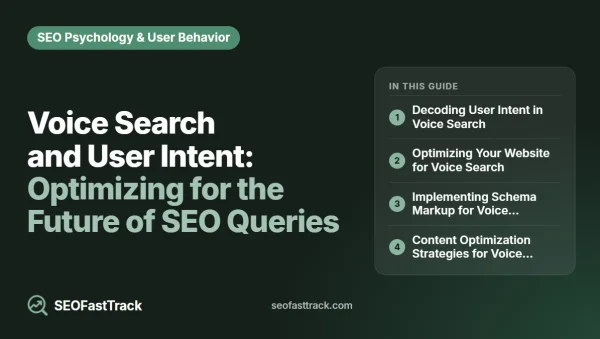
Voice Search and User Intent: Optimizing for the Future of SEO Queries
Understanding User Intent Analysis in SEO
User intent analysis is the cornerstone of modern search engine optimization, helping you align your content with what your audience truly seeks. On SEOFastTrack, this subcategory dives deep into the psychology behind search queries—whether informational, navigational, transactional, or commercial investigation. By mastering intent, you’ll not only improve rankings but also boost engagement, conversions, and user satisfaction. Below, we break down actionable strategies, tools, and real-world examples to help you decode search behavior and craft content that resonates.
🔍 The Four Core Types of User Intent
Understanding the four primary intent categories—informational, navigational, transactional, and commercial investigation—is your first step toward effective optimization. Informational queries seek answers (e.g., “how to bake sourdough”), navigational target specific sites (e.g., “Facebook login”), transactional imply purchase readiness (e.g., “buy Nike running shoes”), and commercial investigation mixes research with buying intent (e.g., “best DSLR for beginners”). Each requires a distinct content format: blog posts for informational, landing pages for transactional, and comparison guides for commercial. Aligning your page type with intent is non-negotiable for ranking success.
Google’s algorithms now prioritize intent matching over simple keyword density. For instance, if you create a product page for a query that’s purely informational, you’ll likely see high bounce rates and low dwell time. Conversely, publishing an in-depth tutorial for a transactional query may fail to convert. By auditing your existing pages against intent categories, you can identify gaps and re-optimize headings, meta descriptions, and internal links. Start with a simple spreadsheet mapping your top 50 keywords to their likely intent, then adjust your content strategy accordingly.
🧠 Cognitive Biases That Shape Search Behavior
Users don’t search in a vacuum—their decisions are influenced by biases like confirmation bias, anchoring, and the bandwagon effect. For example, when someone searches “best affordable laptop,” they may anchor to price ranges they’ve seen in ads or reviews. Recognizing these patterns allows you to tailor your content’s framing. Use social proof (e.g., “Join 10,000 happy users”) for transactional queries, and present balanced pros/cons to counteract confirmation bias in commercial investigations. Emotional triggers like urgency or exclusivity can also sway click-through rates on product pages.
Practical application: Analyze your search console data for queries with high impressions but low clicks. Often, these indicate a mismatch between the user’s bias-driven expectations and your title tag or meta description. Rewrite your snippets to include power words, concrete numbers, and clear value propositions. Additionally, structure content to reduce cognitive load—use bullet points, subheadings, and visual cues. This helps users quickly confirm that your page answers their underlying psychological need, reducing friction and increasing conversions.
🛠️ Tools for Decoding Search Intent
Several SEO tools can streamline intent analysis, saving you hours of manual guesswork. Google’s “People Also Ask” and related searches offer direct clues about question-based intent. Semrush and Ahrefs provide intent scores for keywords, while AlsoAsked visualizes question clusters. For deeper behavior insights, use heatmaps from Hotjar or Crazy Egg to see how users interact with your pages—scroll depth and click patterns reveal whether content meets intent. Combining these tools helps you identify which queries need informational content versus product pages.
Moreover, analyze your competitors’ top-ranking pages for any given keyword. Look at their content length, format (videos, lists, calculators), and tone. If they use a comparison table for a commercial query, you should too. Tools like SurferSEO or Clearscope can also suggest intent-aligned subheadings and entities. Remember, intent analysis is dynamic—seasonal trends, platform migrations, and new features can shift search behavior. Build a monthly review routine using GA4 and Search Console to refine your keyword-to-intent mapping continually.
✍️ Crafting Content That Matches Intent
Once you’ve identified intent, your content creation must follow a strategic blueprint. For informational intent, prioritize comprehensive, scannable guides with step-by-step instructions and authoritative examples. For navigational intent, ensure your branded pages are optimized and easy to find— avoid long-form content here. Transactional pages should feature clear calls-to-action, trust badges, and comparison charts. Commercial investigation content thrives with in-depth reviews, buyer’s guides, and user-generated testimonials. Always match the format to the funnel stage—don’t force a video into a quick-answer query.
Beyond format, pay attention to semantic relevance. Use related terms and synonyms that users might type (e.g., “cheap” vs. “affordable”). Structure your content with hierarchical headings (H1, H2, H3) that mirror question patterns. Additionally, include internal links to other pages that satisfy secondary intents. For example, an informational article about “on-page SEO” should link to a transactional guide for SEO audits. This not only helps users but also signals topical authority to search engines, improving your overall domain relevance.
📈 Measuring Intent Success and Iterating
Monitoring performance is critical to refine your intent strategy. Track key metrics like organic click-through rate (CTR), bounce rate, average session duration, and conversion rate by page. A high bounce rate on a transactional page suggests misaligned intent, while low CTR on informational posts may indicate weak meta descriptions. Use A/B testing for headlines and CTAs to see what resonates better with each intent group. Regularly export search query reports and filter by page to spot new intent variations you haven’t addressed yet.
Also, listen to user feedback—comments, support tickets, and social mentions reveal how people actually phrase their needs. Update your content calendar to incorporate these real-world insights. For example, if users frequently ask “is it worth it?” in comments, add a dedicated section addressing that commercial investigation angle. Remember, user intent isn’t static; it evolves with market trends and algorithm updates. Create a quarterly intent audit that reassigns keywords to new categories, ensuring your site remains agile and responsive to user behavior shifts.
Frequently Asked Questions
How does user intent differ from keyword research?
Keyword research focuses on finding what terms your audience searches for, while user intent analysis digs deeper into why they search. Intent reveals the underlying goal—whether they want information, a specific site, or to make a purchase. Combining both helps you select keywords that match your content strategy and business objectives.
Can the same keyword have multiple intents?
Yes, some keywords are ambiguous, like “apple” (could be fruit, tech brand, or movie). To handle this, create separate content pieces targeting each intent. Use long-tail modifiers (e.g., “apple laptop deals”) to clarify intent. Tools like Semrush can label intent, but cross-reference with SERP results for accuracy.
Does user intent affect local SEO?
Absolutely. Local searches often carry transactional or navigational intent (e.g., “coffee shop near me”). Optimize your pages with local schema, map embeds, and city-specific keywords. Ensure your content answers proximity-based queries quickly, as mobile users expect instant, actionable results.
How often should I update my intent analysis?
At minimum, review your intent mapping quarterly. Search trends and algorithm updates (like Google’s helpful content update) can alter what users expect. Also, monitor seasonal spikes—holiday-related queries shift from informational to transactional rapidly. Set alerts for major keyword shifts using Google Alerts or SEMrush.
What’s the biggest mistake in intent analysis?
Treating all high-volume keywords equally is critical to avoid. Just because a keyword has high search volume doesn’t mean it matches your product or content type. Forcing transactional content into an informational query loses trust—always prioritize serving the user’s true intent, even if it means targeting lower-volume but higher-converting terms.
Related topics