
Click-Through Rate (CTR) Optimization
Read more about this topic
Unlock higher rankings by mastering Click-Through Rate (CTR) Optimization—the art of turning search impressions into meaningful visits. In the crowded digital landscape, even a top position means little if users scroll past your link. By refining your titles, meta descriptions, and rich snippets to align with user intent, you can dramatically boost organic traffic without extra ad spend. This corner of SEO psychology dives into how emotional triggers, curiosity gaps, and persuasive language influence searcher behavior, while also addressing the crucial balance between relevance and click appeal. Whether you’re a small business owner or a seasoned marketer, understanding CTR metrics helps you diagnose performance drops, outpace competitors, and create more compelling search results that demand attention. Start turning those precious impressions into engaged, converting visitors today.
1 article

Articles in Click-Through Rate (CTR) Optimization
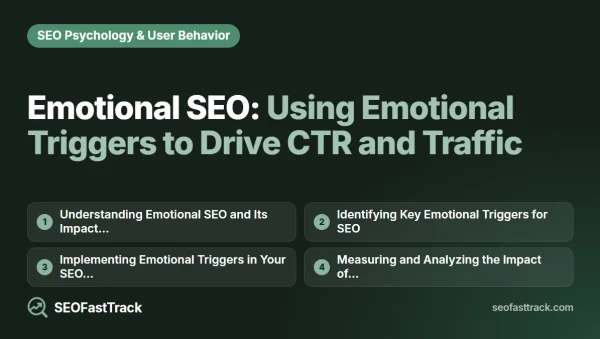
Mastering Click-Through Rate (CTR) Optimization: Turn Searches into Clicks
In the competitive world of search engine optimization, ranking high on Google is only half the battle. The real victory lies in getting users to actually click on your listing. Click-Through Rate (CTR) Optimization is the art and science of making your search result so compelling that it stands out among ten blue links. For small business owners, bloggers, and digital marketers on SEOFastTrack, mastering CTR means more organic traffic without needing to climb additional ranking positions. By understanding user psychology and search behavior, you can transform your metadata from a simple summary into a powerful conversion tool. This subcategory dives deep into practical strategies, psychological triggers, and technical tweaks that boost your visibility and entice users to choose your content over competitors. Let's explore the essential facets of CTR optimization that will elevate your SEO game.
🔍 Crafting Irresistible Title Tags That Demand Attention
Your title tag is the first impression users have of your content in search results. It acts as a headline that must instantly communicate relevance, value, and urgency. To optimize CTR, you need to move beyond generic titles and incorporate emotional triggers, numbers, and power words. For example, using "Ultimate Guide," "Proven Tips," or "2025 Secrets" can increase curiosity and perceived value. Additionally, placing your primary keyword closer to the front of the title helps users quickly recognize relevance, while adding a unique selling proposition—like "For Beginners" or "Free Checklist"—differentiates you from the competition.
Psychological research shows that users scan results in an F-shaped pattern, focusing heavily on the first few words. Therefore, crafting a title that balances clarity with intrigue is crucial. Avoid overstuffing keywords, as it can look spammy and reduce trust. Instead, use a format like "Main Keyword: Benefit + Emotional Trigger." Testing variations using tools like Google Search Console can reveal which titles generate higher CTR. Remember, a compelling title not only boosts clicks but also signals to search engines that your content is valuable, indirectly improving your rankings over time through improved user engagement signals.
🧲 Writing Meta Descriptions That Convert Searchers into Visitors
While meta descriptions no longer directly influence rankings, they play a pivotal role in CTR by serving as your ad copy in search results. A well-crafted meta description expands on your title, providing a concise summary that answers the user's query and highlights the outcome they can expect. To optimize, include your target keyword naturally, add a clear call-to-action (CTA) like "Learn More," "Get Started," or "Download Now," and keep it between 150-160 characters to avoid truncation. Focus on addressing the user's pain point and promising a solution, which creates an immediate connection.
Moreover, leveraging rich snippets such as star ratings, reviews, or product prices can make your listing visually stand out and dramatically increase CTR. For informational content, include a question in the description that mirrors the search intent, then hint at the answer. For example, "Struggling with low blog traffic? Discover 7 actionable strategies to double your readers in 30 days." This approach taps into curiosity and fear of missing out. Regularly audit your meta descriptions to ensure they align with seasonal trends or evolving user intent, and use A/B testing to refine your phrasing for maximum engagement.
📊 Leveraging Structured Data for Eye-Catching Rich Results
Structured data, or schema markup, is a technical SEO technique that helps search engines understand your content's context, enabling them to display enhanced results. These rich results can include review stars, recipe timers, event dates, FAQ sections, or breadcrumbs—all of which occupy more visual space and draw user attention. For instance, if you run a product review site, adding AggregateRating schema can show a 4.5-star rating directly in search results, which significantly boosts trust and click propensity. Similarly, FAQ schema allows your content to appear in the "People Also Ask" boxes, increasing your visibility across multiple SERP features.
To implement structured data effectively, use Google's Structured Data Markup Helper or plugins like Yoast SEO. Focus on markup types most relevant to your niche, such as Article, Product, LocalBusiness, or How-To. After implementation, test with the Rich Results Test tool to ensure no errors. The upside is substantial: pages with rich snippets can experience CTR improvements of up to 30-50% compared to standard listings. Even if your content already ranks well, adding structured data can give you a competitive edge, especially for voice search queries where concise, structured answers are prioritized.
⚡ Optimizing URL Slugs for Clarity and Trust
Your URL structure is another often-overlooked CTR lever. A clean, descriptive URL that includes your primary keyword signals relevance both to users and search engines. For example, "seofasttrack.com/ctr-optimization-tips" is far more clickable than "seofasttrack.com/?p=123". Short, readable URLs are easier to scan, share, and remember. They also evoke a sense of professionalism and transparency, which increases trust before the user even clicks. Avoid unnecessary stop words, dates that may become outdated, or random numbers that dilute the keyword's prominence.
Furthermore, using hyphens to separate words (rather than underscores) is the standard for SEO. A well-structured slug complements your title and meta description by reinforcing the topic. For instance, if your title is "How to Increase Organic CTR," your slug could be "/increase-organic-ctr". This consistency helps users confirm that the page matches their search intent. Additionally, consider using uppercase or lowercase consistently, though lowercase is conventional. While URL changes can impact existing rankings, implementing this optimization from the start or using proper 301 redirects ensures you reap the benefits of higher CTR without losing accumulated link equity.
🖼️ Enhancing Thumbnails and Visual Elements for Video and Image Results
In an increasingly visual search landscape, optimizing images and video thumbnails can massively influence CTR, especially for YouTube, Google Images, or product listings. For video content, creating a custom thumbnail with bold text overlays, high-contrast colors, and a human face can increase clicks by up to 154% compared to auto-generated frames. Ensure the thumbnail accurately represents the content to avoid bounce rates. For image search, use descriptive file names, alt text, and proper dimensions (like 1200x630 px for social sharing) to make your visuals eligible for rich results like carousels.
For blogs or e-commerce, adding a visually appealing featured image that appears in social media previews (via Open Graph tags) encourages shares and clicks from social platforms. Similarly, using high-quality diagrams, infographics, or charts within your content can make your page stand out in the "People Also Ask" sections if properly marked with schema. Remember, users process visuals 60,000 times faster than text, so investing in custom graphics not only improves user experience but also signals to search engines that your content is high-quality. Always compress images for speed, as slow-loading visuals can negatively affect user behavior and CTR.
Frequently Asked Questions
What is a good click-through rate for organic search results?
A good CTR varies by industry and position, but average organic CTR for the first result is around 28-32%, dropping to about 15-17% for second and 10-12% for third. For most small businesses, achieving a CTR above 3-5% for lower positions is considered healthy. Focus on improving relative to your competition by testing titles and descriptions.
How can I track my CTR in Google Search Console?
Navigate to Performance in Google Search Console, view queries and pages tabs, and apply the date range filter. You’ll see aggregate CTR, impressions, and average position. Use the comparison tool to segment by device or keyword. Track changes after implementing CTR optimizations to measure impact.
Does CTR affect my Google rankings directly?
Google has confirmed that CTR is not a direct ranking factor, but high CTR can improve user engagement signals like dwell time and low bounce rate, which indirectly influence rankings. A high CTR also hints at content relevance, prompting Google to test your page in more prominent positions.
Can I use emojis in my title tags to increase CTR?
Yes, emojis can increase visual appeal and CTR, especially for mobile users, as they break the monotony of text. However, use them sparingly and contextually. Test with minor keywords first, as emojis might appear unprofessional in some niches. Always preview how they render in search results, as some devices may not display them.
How often should I refresh my meta descriptions for better CTR?
Refresh meta descriptions whenever you update content, change target keywords, or notice declining CTR over a month. The average page sees CTR decay after a few years. Use seasonal keywords like "2025 trends" to stay relevant. A/B test two versions for two weeks to determine which performs better before full replacement.
Related topics