Predictive SEO Analytics and Forecasting
Read more about this topic
Unlock the future of your search rankings with Predictive SEO Analytics and Forecasting—the game-changing approach that turns raw data into actionable foresight. Instead of reacting to algorithm updates or traffic dips after they happen, this advanced methodology leverages historical trends, machine learning, and statistical modeling to anticipate shifts in search volume, keyword performance, and competitor behavior. For small business owners, bloggers, and digital marketers, this means you can proactively allocate resources, fine-tune content strategies, and stay ahead of seasonal peaks or emerging niches. Imagine knowing which pages will likely drop in rankings before Google rolls out an update, or identifying rising queries that your competitors haven’t yet targeted. With predictive forecasting, you’re not just analyzing the past—you’re building a strategic roadmap for sustainable growth, reducing guesswork, and maximizing ROI on every piece of content and backlink. Whether you’re optimizing for local SEO, e-commerce, or a niche blog, these analytics empower you to make data-driven decisions with confidence, turning volatility into a competitive advantage.
2 articles

Articles in Predictive SEO Analytics and Forecasting
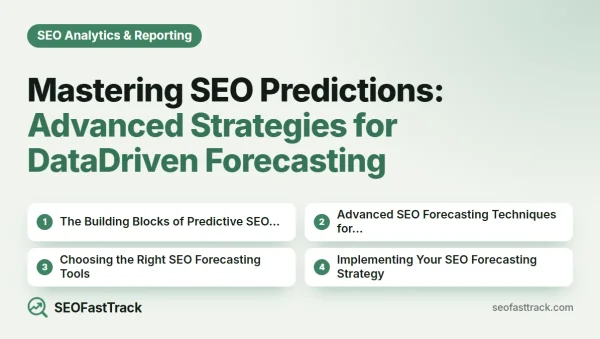
Mastering SEO Predictions: Advanced Strategies for DataDriven Forecasting
Unlock Future Growth with Predictive SEO Analytics and Forecasting
Welcome to the Predictive SEO Analytics and Forecasting subcategory on SEOFastTrack. Here, we move beyond reactive reporting and dive into the strategic power of anticipating search engine trends, user behavior, and ranking fluctuations before they happen. This guide is designed for small business owners, bloggers, and digital marketers who want to transform raw data into a forward-looking roadmap. By mastering predictive analytics, you can allocate resources smarter, pivot content strategies early, and outpace competitors who are stuck in the rearview mirror of historical data. Let’s explore how to turn your SEO data into a crystal ball for sustainable organic growth.
🔮 Core Techniques for Building Reliable Forecasts
Predictive SEO isn’t about guesswork; it’s about using statistical models, historical trend lines, and machine learning algorithms to project future keyword volumes, click-through rates, and even page rankings. In this section, you’ll learn how to leverage Google Search Console and Analytics data to identify seasonality, trend decay, and emerging topics. We’ll cover practical methods like regression analysis, time-series forecasting, and using tools like Google Trends to validate assumptions. You’ll discover how to separate signal from noise, ensuring your forecasts are based on robust data rather than vanity metrics.
Expect step-by-step guidance on setting up forecasting spreadsheets or using specialized SEO software that automates predictive scoring. We’ll explain how to model the impact of algorithm updates on your current traffic and how to simulate “what-if” scenarios—for example, if a competitor gains a featured snippet. By the end, you’ll be able to create a 6-12 month traffic projection that aligns with your business goals, helping you justify SEO budgets to stakeholders with confidence. This is not just about predicting numbers; it’s about predicting opportunities and risks that others miss.
📊 Leveraging Machine Learning for Rank Tracking
Machine learning (ML) is reshaping how we anticipate ranking shifts. Instead of relying on manual rank checks, predictive models can analyze thousands of SERP features—like featured snippets, video carousels, and local packs—to estimate your page’s future visibility. Here, you’ll learn how to use ML-based tools that score your content’s authority, relevance, and user engagement signals to forecast rank position changes. We’ll demystify concepts like supervised learning for classification and how training datasets from past algorithm updates can improve prediction accuracy.
You’ll also discover how to integrate ML outputs with your existing SEO dashboards, turning complex data into actionable alerts. For instance, a predictive model might flag a page likely to drop in rankings due to declining backlink velocity, allowing you to build links proactively. We’ll discuss the ethical use of ML, avoiding overfitting to historical data, and how to validate model outputs with real-world testing. This section bridges the gap between theoretical analytics and practical, everyday SEO decisions, making advanced forecasting accessible even if you’re not a data scientist.
🔄 Forecasting Content Performance & Topic Clusters
Predictive analytics isn’t just for technical SEO; it’s a goldmine for content strategy. This section focuses on forecasting which topics and content formats will gain traction before they peak. You’ll learn how to analyze search query growth rates, social listening signals, and competitor content gaps to identify emerging keywords. We’ll cover how to use predictive scoring to prioritize blog posts, product pages, and landing pages based on their estimated organic conversion potential, not just traffic volumes.
You’ll also understand how to model the performance of topic clusters—mapping pillar pages and supporting articles to project their combined authority growth. By forecasting the click-through rate and dwell time of potential content, you can decide whether to create a quick win or a comprehensive evergreen guide. This proactive approach helps you avoid investing in saturated topics with declining demand. Expect templates for content calendar forecasting and a framework for measuring the ROI of your predictive content bets, ensuring every piece you publish has a clear, data-backed purpose.
⚠️ Managing Risk: Predicting Algorithm Updates & Volatility
Search engine algorithms change frequently, but that doesn’t mean you have to be caught off guard. Predictive SEO analytics can help you anticipate volatility spikes and adapt your strategy before a core update hits. In this section, we’ll explore volatility indices, historical update patterns, and how to monitor Google’s official communications alongside real-time SERP fluctuations. You’ll learn to build early-warning systems using anomaly detection on your traffic and ranking data, distinguishing between normal noise and a true algorithmic penalty.
We’ll provide a checklist for stress-testing your website’s resilience, including how to forecast the impact of changes to link quality, page speed, or structured data. You’ll also discover how to model the risk of over-optimization and create a diversification plan for your traffic sources. By using predictive models to simulate worst-case scenarios, you can develop contingency plans that minimize revenue loss. This proactive risk management turns anxiety into a strategic advantage, positioning you as a resilient SEO professional ready for any update.
📈 Integrating Forecasting into Monthly Reporting
Finally, predictive analytics must be communicated effectively to be useful. This section teaches you how to blend forecasting into your monthly SEO reports for clients, bosses, or your own team. You’ll learn how to present predicted versus actual performance visually, using charts that show confidence intervals and trend lines. We’ll cover how to write clear executive summaries that explain not just “what happened” but “what will likely happen next” and why, making your reports indispensable for decision-making.
You’ll also get tips on automating forecast updates using Google Data Studio, Looker Studio, or custom Python scripts, saving hours of manual work. We’ll discuss how to set realistic KPI targets based on predicted growth, avoiding the trap of overpromising. By framing your SEO strategy as a predictive, data-driven discipline, you’ll elevate your reputation and gain long-term buy-in for ongoing optimization. This final piece ties all the concepts together, ensuring your forecasting skills translate into tangible business outcomes and clearer stakeholder communication.
Frequently Asked Questions
What is the difference between descriptive and predictive SEO analytics?
Descriptive analytics tells you what happened in the past—like traffic drops or ranking changes. Predictive analytics uses that historical data to forecast future outcomes, such as expected traffic next month or the likelihood of ranking after a content update. Descriptive is reactive; predictive is proactive, helping you plan rather than just review.
Do I need to be a data scientist to use predictive SEO forecasting?
No, you don’t. Many modern SEO tools like Ahrefs, SEMrush, and Clearscope include built-in predictive features. You can also use simple Google Sheets with built-in forecasting functions or add-ons. However, understanding basic statistical concepts like linear regression and correlation helps you interpret results accurately and avoid common pitfalls.
How often should I update my predictive SEO models?
Ideally, refresh your models monthly or quarterly, depending on your traffic volatility and content cadence. If you’re in a fast-changing niche like tech or news, update weekly. Always retrain your model after major algorithm updates or significant changes to your site, as historical patterns may no longer be valid.
Can predictive analytics predict Google penalty or manual action?
It can’t predict with certainty, but it can identify high-risk patterns like unnatural link spikes or sudden drops in core web vitals. By monitoring these metrics continuously and comparing them to baseline norms, you can take corrective action early. However, never rely solely on prediction; always stay updated with Google’s guidelines.
What are the best free tools for starting with predictive SEO analytics?
Google Search Console and Google Analytics are free and offer trend analysis and simple forecasting. Google Trends provides historical data for keyword seasonality. For more advanced forecasting, use Google Sheets’ FORECAST function or explore open-source Python libraries like Prophet. These are excellent starting points before investing in premium tools.
Related topics