
Long-Term SEO Strategies for Sustainability
Read more about this topic
Future-proof your online growth with sustainable SEO tactics. Unlike short-term hacks that risk penalties, long-term SEO strategies focus on compounding authority, user intent, and resilient rankings. By prioritizing ethical link building, evergreen content, and technical health, you’ll build a digital asset that thrives through algorithm shifts. This approach isn’t just about ranking—it’s about reducing churn, cutting ad dependency, and earning trust that converts over years. Perfect for small business owners and bloggers who want steady, measurable ROI without burning out. Learn how to audit for legacy risks, refresh aging posts, and align with Core Web Vitals for lasting visibility.
1 article

Articles in Long-Term SEO Strategies for Sustainability
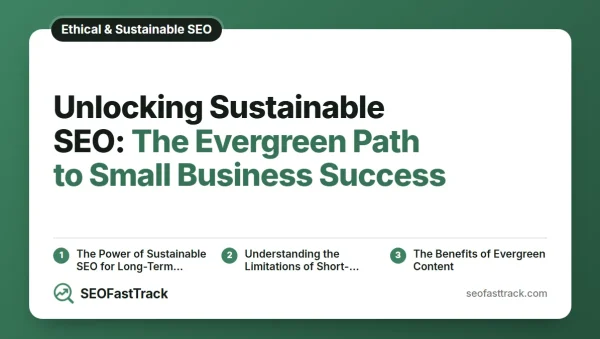
Build a Resilient Online Presence That Thrives for Years
In the fast-paced world of digital marketing, quick wins often fade as quickly as they appear. Long-term SEO strategies for sustainability focus on creating a durable foundation that withstands algorithm updates, market shifts, and evolving user behavior. Unlike black-hat or aggressive tactics, sustainable SEO prioritizes user value, consistent authority growth, and ethical practices. This subcategory within Ethical & Sustainable SEO helps small business owners, bloggers, and digital marketers move beyond short-term rankings to build compounding organic growth. Here, you’ll discover how to future-proof your website with evergreen content, robust technical health, and relationship-driven link building—ensuring your traffic doesn’t just spike, but steadily climbs year after year.
📈 Embracing Content Evergreening for Lasting Relevance
Evergreen content is the backbone of sustainable SEO because it continues to attract search traffic long after publication. Instead of chasing fleeting trends, focus on core topics that answer fundamental questions in your niche. Update statistics, refresh examples, and add new insights periodically to keep information current. This approach signals to search engines that your pages are actively maintained, boosting crawl frequency and trust signals. By creating a content update calendar, you ensure older posts remain competitive, reducing the need for constant new production while preserving your domain’s topical authority.
To maximize sustainability, prioritize comprehensive pillar pages that cover a subject in depth, then link to smaller cluster posts. This internal linking structure distributes authority and helps search engines understand your site’s architecture. Over time, these pages become reference points that earn natural backlinks from other sites, further solidifying your position. Avoid deleting underperforming posts—instead, merge or repurpose them. Sustainable SEO treats every piece of content as an asset that can be optimized, not discarded, which reduces wasted effort and builds a library of valuable resources for your audience.
🔗 Ethical Link Building That Compounds Over Time
Link building for sustainability is not about mass outreach or purchasing links; it’s about earning digital citations through genuine value. Focus on creating original research, insightful case studies, or free tools that journalists and bloggers naturally want to reference. Engage in digital PR by offering expert commentary on industry news, which generates high-quality editorial links. Each ethical backlink serves as a long-term vote of confidence, slowly raising your domain authority without risking penalties from search engines. This approach requires patience but yields far more durable results than risky quick schemes.
Additionally, cultivate relationships with complementary businesses and local organizations. Guest posting on reputable sites within your niche, participating in community forums, and being quoted in podcasts can lead to organic mentions. Monitor your backlink profile regularly to disavow toxic links, ensuring your link equity remains clean. Sustainable link building also involves internal linking—strategically pointing to cornerstone content from newer posts to distribute authority. Over months, this web of ethical connections creates a resilient profile that continues to strengthen even as algorithms evolve.
⚙️ Technical SEO Maintenance for Reliable Performance
Sustainable SEO demands a technically sound foundation so search engine crawlers can easily access and index your content. Regular audits for broken links, page speed issues, and mobile usability prevent gradual decay that erodes rankings. Implement a scalable site architecture with clear hierarchy, XML sitemaps, and proper canonical tags to avoid duplicate content confusion. As your site grows, maintaining clean URLs and structured data (schema markup) ensures that search engines understand your content’s context, which supports rich snippets and better visibility. These technical elements create a stable base that doesn’t crack under traffic spikes or algorithm refreshes.
Beyond initial setup, sustainable technical SEO involves proactive monitoring using tools like Google Search Console. Track core web vitals, crawl errors, and index coverage to catch issues early. Set up automated reports to alert you to sudden drops in impressions or server errors. Regularly update your CMS, plugins, and security protocols to prevent hacks that can devastate your rankings. By treating technical health as an ongoing practice rather than a one-time fix, you reduce the risk of losing ground to competitors, ensuring your website remains accessible and fast for users—a core principle of ethical, sustainable SEO.
📊 User Experience and Engagement as a Growth Engine
Search engines increasingly measure success by user satisfaction signals, such as click-through rate, dwell time, and bounce rate. A sustainable strategy prioritizes intuitive navigation, fast load times, and compelling meta descriptions to encourage clicks from search results. Once on your page, content must be genuinely useful, formatted with subheadings, bullet points, and images to aid readability. This focus on UX not only boosts rankings but also builds a loyal audience that returns directly or via bookmarks, reducing dependency on search traffic alone. As users engage more, your site earns stronger authority trust, creating a positive feedback loop.
Implementing interactive elements like quizzes, calculators, or comment sections can increase dwell time and encourage social sharing, which broadens your reach without paid ads. Collect user feedback through surveys to identify pain points and address them in content updates. Sustainable SEO also embraces accessibility (e.g., alt text, proper heading tags, transcript for videos), which improves experience for all users and aligns with Google’s inclusive ranking principles. By making every visit productive and pleasant, you signal to both humans and search engines that your site deserves consistent, top-tier placement over the long haul.
🔍 Adapting to Algorithm Updates Without Panic
Google continually refines its algorithms, often causing ranking volatility. A sustainable approach requires staying agnostic to specific ranking factors and focusing on intent satisfaction. Subscribe to reputable SEO news sources and analyze official announcements, but avoid making drastic changes after every update. Instead, assess your site’s core metrics—organic traffic, conversions, and crawl frequency—to spot genuine issues. Overreacting often leads to risky shortcuts; patience lets you observe patterns. Building a diversified traffic portfolio (email, social, direct) also cushions algorithm shifts, ensuring your business doesn’t collapse when search dynamics change.
Create a risk mitigation playbook that outlines steps for common scenarios, such as a 20% traffic drop or sudden indexing decrease. Document your historical SEO successes and failures to understand what truly works for your niche. Engage in continuous learning through webinars and courses, but apply changes incrementally, testing them on low-value pages first. Sustainable SEO is not about predicting every update but about maintaining core principles—quality content, ethical links, and fast, user-friendly pages—that have consistently survived all major changes. This resilience keeps your rankings stable, even as the landscape evolves.
Frequently Asked Questions
How long before long-term SEO strategies show results?
Typically, you may see noticeable improvements in organic traffic within 3 to 6 months, but sustainable gains often require 12 to 18 months. This timeline depends on your niche competitiveness, current domain authority, and content quality. The focus is on compounding growth—early wins may be modest, but they build a solid foundation for exponential returns later.
Can I combine sustainable SEO with short-term tactics like PPC?
Yes, absolutely. Short-term tactics like paid ads can provide immediate visibility while your SEO foundation matures. However, treat PPC as a supplement, not a replacement. Use PPC data to learn which keywords convert best, then integrate those insights into your organic content strategy. Sustainable SEO focuses on long-term equity, while PPC offers temporary leverage.
What are the most common mistakes that ruin long-term SEO?
The biggest mistakes are keyword stuffing, buying low-quality backlinks, neglecting site speed, and ignoring mobile usability. Another critical error is pausing content updates—stale info loses rankings. Also, failing to monitor technical health leads to crawl issues. Consistent, ethical practices prevent these pitfalls and build lasting authority.
How frequently should I update existing content for sustainability?
Ideally, review your top 20% of performing pages at least quarterly. Update statistics, refresh date stamps, improve internal links, and add new sections based on recent queries. For smaller posts, an annual refresh is sufficient. Regular updates signal freshness to search engines and keep your content relevant without constant new production.
Is it necessary to hire an SEO professional for long-term sustainability?
Not always, but it helps. Many small business owners and bloggers can learn and implement core strategies using free tools like Google Search Console and analytics software. However, if you lack time or technical expertise, a professional can audit and streamline your efforts. Ultimately, success depends on consistent execution, whether you do it yourself or outsource.
Related topics